
Advisory Committee
Patients
Lāsma Nikolaisone is a colorectal cancer survivor from Latvia, diagnosed with rectal cancer in 2019 at the age of 33.
Since 2023, she has been actively involved in patient advocacy, representing colorectal cancer patients, young adults, and women with cancer. She serves as a board member of the colorectal cancer patient organisation EuropaColon Latvija and is part of the national alliance of cancer patient organisations, OncoAlliance.
Lāsma is also actively engaged in international advocacy, collaborating with Digestive Cancers Europe (DiCE) on various projects and initiatives, and contributing as a patient advocate with Inspire2Live. She is also a co-founder of the European cancer advocacy organisation Women Cancer Europe.
She is the lead author of the guidebook ‘Finding Your Way: Living Well Beyond Colorectal Cancer’, developed in collaboration with DiCE. She is also the initiator, coordinator, and patient reviewer of the guidebook ‘Life with Low Anterior Resection Syndrome (LARS)’ for rectal cancer patients, created in collaboration with and supported by DiCE, and published in both Latvian and English.
Michael Kecht is a colorectal cancer survivor and patient advocate. Diagnosed with stage IIIC early-onset CRC at the age of 28, he has since dedicated himself to ensuring younger patients are heard sooner than he was. As a Patient Advisor with Digestive Cancers Europe, a WeCAN Academy graduate, and a contributor to several European patient networks, he combines lived experience with scientific literacy to advocate for earlier diagnosis, better survivorship care, and genuine patient co-creation in research.

Liliana Mackowiak
People often ask me, how did you find out?
Well, I entered that unknown territory, which no one wants to pass through when I was 37. I was thinking that world was my oyster and I couldn’t believe that myself, healthy strong individual , is now being diagnosed with stage 4 bowel cancer… is this even possible?
My perception of that disease was associated with elderly gentleman, who neglected his checkups but I couldn’t be more wrong about it.
Bowel cancer sadly wreaks havoc amongst young people, more and more often! We seeing global alarming high numbers of gastrointestinal cancers affecting young generation, taking lives before we even had chance to live them.
I underwent a major emergency surgery, which was followed by intense chemotherapy combined with targeted therapy and I’m still receiving treatment because I’m on it for life. It’s not an easy journey, I could say that most probably I’ve experienced majority side effects listed on the drug labels and management of those it’s a full time job itself but even during hard moments… I take each day as a blessing and I’m grateful that I’m still getting to see my family.
Reflecting on my journey, I can say that society is heavily uneducated about bowel cancer. We avoid uncomfortable conversations. Medical professionals are not always seeing urgency of additional tests to rule out cancer diagnosis. We don’t talk enough about symptoms linked to this type of cancer. I certainly missed some of my early symptoms like back pain followed by a stomachache. And we certainly not stressing enough about the fact that early diagnosis of bowel cancer can lead to full recovery and save lives!
Jude Mifsud is a patient advocate based in Cheshire, England, and a bowel cancer survivor. Diagnosed with stage III bowel cancer at the age of 33, Jude underwent a bowel resection followed by chemotherapy, demonstrating remarkable resilience throughout her treatment and recovery. She is married with two children.
As a mother, Jude is deeply committed to raising awareness of bowel cancer, particularly among younger people who may not recognise the early signs or believe themselves to be at risk. Drawing on her own lived experience, she advocates for earlier diagnosis, improved awareness, and more open, honest conversations about digestive health.
Jude is passionate about ensuring that others receive timely treatment and support, using her voice to highlight the importance of listening to your body and acting quickly when something doesn’t feel right. Through her advocacy, she aims to encourage understanding, break down barriers to discussion, and ultimately improve outcomes for patients across Europe.
Natalia Muñoz-Wolf, PhD, is an experienced translational scientist in immunology and immuno-oncology. Formerly an Assistant Professor in Clinical Research at Trinity College Dublin, Natalia’s career took a turn when her husband was diagnosed with Stage IV early-onset colorectal cancer at
age 34. Her commitment to his care led their family across Dublin, Barcelona, Buenos Aires, and Madrid to access life-saving surgeries and four clinical trials, eventually bringing him to full remission.
Today, Natalia serves as a Scientific Consultant for the Paltown Foundation, an American non-profit supporting colorectal cancer patients. As a researcher and project manager, she leads initiatives to make complex clinical trial data accessible to promote informed medical decisions.
Her professional expertise and lived experience give her a full appreciation of clinical trial complexities affecting both, participants and drug makers.
Believing that geography should never limit survival and that accrual should not delay innovation, Natalia engages with pharma and policymakers to close the access gap. She advocates for expanded access programs, pragmatic trials, and cross-border participation, ensuring the patient’s voice remains central to clinical innovation.
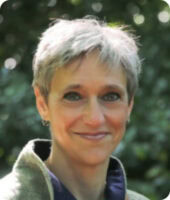
Cécile Duchesnes is a medical writer, patient advocate, and mother of three, originally from France and now living in the UK with her husband and three children. Trained as a molecular biologist, she began her career in research before moving into education, teaching biology and chemistry in secondary schools while living in New Zealand.
In 2019, at the age of 42, Cécile was diagnosed with stage 3 colorectal cancer, which later progressed to stage 4. She remains under active treatment and is passionate about using her scientific background and lived experience to raise awareness, support others affected by cancer, and advocate for better outcomes for patients.
Outside of her professional and advocacy work, Cécile enjoys gardening, crafting, walking, yoga, and Zumba, activities that help her maintain balance, resilience, and a positive outlook.
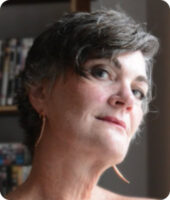
Louisa was diagnosed with Stage IV colorectal cancer in 2021, at age 49, and given a prognosis of 1.5-3 years. Thanks to a number of emerging interventions, an excellent team and the support of friends, family and some strangers along the way, she is still alive and healthy. She remains in treatment, and still hopes to reach NED status in the coming year. In the meantime, she is passionate about shifting preconceived notions and stigmas around this disease, encouraging young people to get themselves checked out, and getting healthcare providers to take the possibility of cancer more seriously with their younger patients. With a long background in human-centred strategy and design, Louisa hopes to make a positive contribution to this and other DiCE projects.

Laure Chotel entered the world of cancer in January 2021 with her husband’s diagnosis of incurable metastatic colorectal cancer at 43 years old.
Laure committed herself to helping her husband access the best possible treatment, but she encountered a number of difficulties: access to innovative treatments and molecular testing in France and Europe, inclusion/exclusion criteria for participating in clinical trials, lack of treatment options for certain mutations, the role of the caregiver in supporting their loved one, unequal access to information and medical expertise, etc. These difficulties led Laure to become aware of the injustices suffered by patients and caregivers. That is why she now strives to support other patients and caregivers.
Laure Chotel is now a colorectal cancer patient advocate, involved in clinical research and HTA. She belongs to patient organizations in France (Mon Réseau Cancer Colorectal), Europe (Digestive Cancers Europe) and the USA (Colontown). Laure represents patients and caregivers at the institutional and industry levels and represents them within various organizations (ethics committee in France, Cancéropôle Est, Unicancer, etc.).
She is a EUPATI fellow (European Patients Academy on Therapeutics Innovation), holds a master’s degree in Applied Linguistics, a discipline in which she has published, and has worked in higher education for over 15 years.
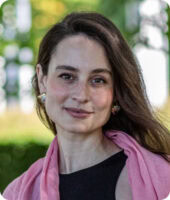
Mila is a Patient advocate and Communication Specialist. My work is driven by my lived cancer experience and a strong commitment to equity, diversity, and inclusion in healthcare. I am passionate about bridging the gap between patients and healthcare systems, ensuring that lived experience meaningfully shapes research, policy, and care.
Healthcare Professionals

Gianluca Mauri received a degree of Doctor of Medicine and Surgery at Università degli Studi di Milano-Bicocca, and a degree of Medical Oncologist at Università degli Studi di Milano, Milan, Italy. Then, he recently completed a PhD in Molecular Oncology at IFOM-ETS The AIRC Institute of Molecular Oncology and Università degli Studi di Milano. In 2018 he was awarded the Ermenegildo Zegna Founder’s Scholarship. Since Novembre 2024, He is now working as Medical Oncology as permanent staff member at Ospedale Niguarda, Milan, IT.
He is committed to clinical care of persons with solid tumors and to research and development of novel therapies. Research programs comprise mostly phase I-II clinical studies focusing on gastrointestinal cancers. Since 2018, He is particularly dedicated to clinical care of early-onset colorectal cancer (EO-CRC) patients. In parallel, he is working on several translational research projects aiming at underpinning the biological features of these peculiar subset of cancers.
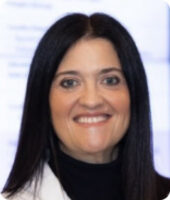
Dr Elena Elez is a medical oncologist and head of the Gastrointestinal Tumours area at Vall d’Hebron Hospital (HUVH) in Barcelona, where she has combined clinical practice, teaching, and research since 2007.
Dr Elez has been an active member of multidisciplinary gastrointestinal tumour boards and has participated as an investigator in Phase I-III clinical trials, mainly focused on novel therapies and biomarkers for colorectal cancer. Her instrumental work in molecular subtyping and gene expression analysis has established her as a leading figure in colorectal cancer research.
She is regarded as a national and international reference in advancing research in colorectal cancer with BRAFV600E mutations and microsatellite instability. Thanks to the research led by Dr Elez, which has developed new targeted therapies for this tumour type and contributed to identifying resistance mechanisms, the Gastrointestinal and Neuroendocrine Tumours Unit at HUVH has strengthened its leading position in this field.
Additionally, Dr Elena Elez is an Associate Professor at the Universitat Autònoma de Barcelona, where she supervises doctoral theses and resident training. She also actively contributes to national and international oncological societies to improve the quality of cancer care.
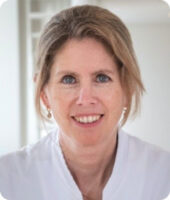
Prof.dr Manon Spaander is a professor in early detection and screening of premalignant gastrointestinal diseases at the department of Gastroenterology and Hepatology at the Erasmus MC University Medical Center in Rotterdam, the Netherlands. Her clinical and research focus on prevention and early detection of gastrointestinal cancers.
She contributed to the set-up of the Dutch bowel screening program and is still involved as national advisor for quality assurance of colonoscopy performance within the Dutch bowel screening program. She published many articles on colorectal cancer screening and was the first author of the review on ‘Young-onset colorectal cancer’ published in Nature Reviews in 2023.
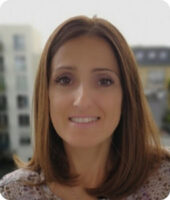
Dr. Loredana Vecchione is a board-certified Hematologist and Medical Oncologist at Charité – Universitätsmedizin Berlin, Germany.
She obtained her M.D. degree in 2004 and completed her specialization in Medical Oncology in 2008 at the University of Campania Luigi Vanvitelli in Naples, Italy.
She furthered her academic achievements by obtaining a Ph.D., conducting her research at the Katholieke KU Leuven in Belgium in 2012. The same year, she was awarded a prestigious ESMO Translational Research Fellowship. She conducted advanced postdoctoral research at Netherlands Cancer Institute in Amsterdam, focusing on the identification of therapeutic vulnerabilities in BRAF-mutated colorectal cancers.
Since joining Charité in 2017, Dr. Vecchione has combined clinical care with translational and preclinical research, expanding her expertise to achieve board certification in Hematology in 2025. Her clinical expertise is dedicated to the treatment of patients with hematologic and oncologic malignancies, with a particular focus on gastrointestinal cancers.
Her research interests center on colorectal cancer biology and the identification of molecular predictors of response to systemic therapies. She actively serves as a co-investigator in numerous clinical trials conducted in both Germany and Italy. With over 40 peer-reviewed publications, she is alo an active member of the European Society for Medical Oncology (ESMO), serving as the Chair of the ESMO Continuing Medical Education Working Group from 2019 to 2023.
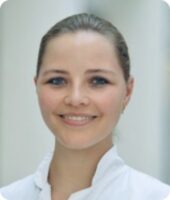
Dr. Alena Annbalou Hasenburg is a resident physician in Hematology, Oncology and Cancer Immunology at Charité – Universitätsmedizin Berlin, Germany, where she is completing her specialist training in Hematology and Medical Oncology.
She obtained her M.D. degree in 2021 and completed her doctoral thesis in 2024 on progression patters of glioblastoma under Tumor Treating Fields at the department of Neurosurgery at Charité Universitätsmedizin Berlin, Germany.
Her clinical and scientific work now focuses on gastrointestinal oncology, particularly colorectal cancer. At Charité, she is part of the colorectal cancer working group under the mentorship of Professor Stintzing. Her research interests include early-onset colorectal cancer (EOCRC), metastatic colorectal cancer, and molecularly defined tumor subgroups.
Her current research aims to better understand the etiology, clinical impact, and distinct characteristics of EOCRC through the systematic analysis of clinical, pathological, molecular, treatment-related, and patient-reported data. A particular focus lies on identifying risk factors, evaluating survivorship issues, and developing research tools that reflect the specific needs and perspectives of younger patients with colorectal and other gastrointestinal malignancies.
Dr. Hasenburg is a member of the Arbeitsgemeinschaft Internistische Onkologie (AIO) as well as European Society of Medical Oncology (ESMO) and is actively involved in academic and collaborative research initiatives in gastrointestinal oncology.
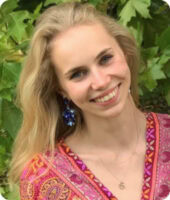
Sophia Harmer, originally from Vienna, she moved to London in 2023 for her MSc in Health Psychology at UCL. She has since been working as a Research Assistant in the Behavioural Science and Early Cancer Diagnosis Research Group, where she is involved in various studies focusing on how psychological, behavioural and social factors influence the pathways to cancer diagnosis. In October 2026, she will be starting a PhD investigating barriers to early diagnosis of early-onset colorectal cancer.
Professor Kevin Monhan is a Professor of Practice (Gastroenterology) at Imperial College, and Consultant Gastroenterologist and Endoscopist at the Lynch Syndrome and Family Cancer Clinic, Polyposis Registry and Wolfson Endoscopy Unit, at St Mark’s Hospital, London. He holds key leadership roles, inclusing Co-director of the St Mark’s Centre for Familial Intestinal Cancer and Clinical Scientific Officer.
An expert in hereditery cancers, Professor Monhan was elected to the Insight Council (InSiGHT) in 2024 and appointed to the Scientific Advisory Board for the Propective Lynch Syndrome Database (PLSD) in 2025.
As an NHSE Lynch syndrome Programme Clinical Advisor, he was instrumental in the development of the national bowel cancer screening programme for Lynch syndrome in England. He also co-led the NHS England National Lynch Syndrome Transformation Programme, designed to ensure diagnosis of this condition in people with a diagnosis of cancer.
After earning his PhD in Cancer Genetics from Imperial College in 2009, his work has focused on genetic testing, endoscopic and other screening for gastrointestinal cancer in susceptible populations. He is also interested in caring for patients with other GI diseases with colleagues.
He currently leads major research initiative as Chief Investigator (CI) for both the FIT for Lynch multicentre study, focused on development and evaluation of biomarkers in the surveillance of people with Lynch syndrome, and for the Lynch Cancers (LynC) study, an investigation in to molecular and immune events in this population.