
Precision medicine: treating the right patient with the right therapy at the right time
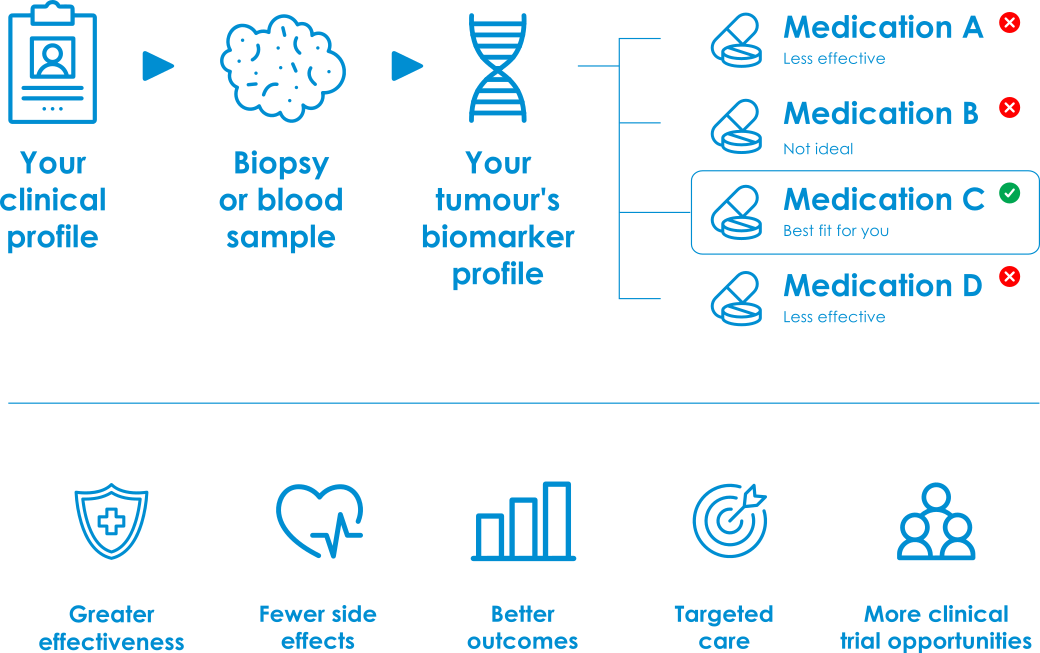
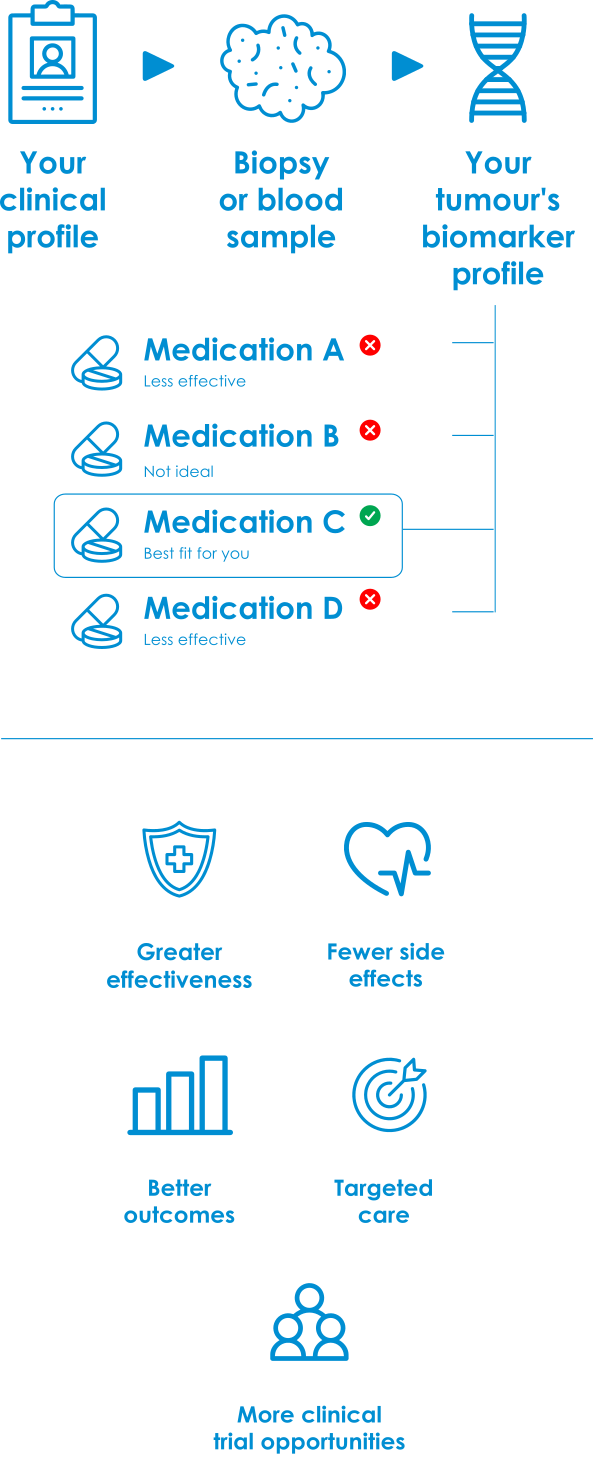
Precision medicine, also known as personalised medicine, is an approach that tailors treatment according to the unique characteristics of both the patient and the tumour1. Before personalised medicine, patients with the same type of cancer were usually treated with the same standard treatment (“one-size-fits-all”), even though responses to treatment could vary widely between individuals2. Research has demonstrated that these differences are frequently explained by differences in the tumour’s genes2. Therefore, instead of giving the same treatment to all patients with a specific cancer type, precision medicine integrates the characteristics of the tumour as well as the patient’s individual factors such as age, overall health, comorbidities, lifestyle, and environment2.
The goal of precision medicine in cancer care is to deliver the most effective treatment while reducing unnecessary side effects, improving both survival and quality of life. Instead of a “one-size-fits-all” approach, it aims to deliver the right therapy to the right patient at the right time1,2. Although this approach has transformed cancer care, precision medicine does not always replace standard treatments such as chemotherapy, surgery, or radiotherapy. Instead, it often helps refine treatment decisions and identify patients who may benefit from targeted therapies or immunotherapy3.
1. Rulten, S. L., Grose, R. P., Gatz, S. A., Jones, J. L. & Cameron, A. J. M. The Future of Precision Oncology. Int. J. Mol. Sci. 24, 12613 (2023).
2. Rituraj et al. Precision oncology: transforming cancer care through personalized medicine. Medical Oncology 42, 246 (2025).
3. Moscow, J. A., Fojo, T. & Schilsky, R. L. The evidence framework for precision cancer medicine. Nat. Rev. Clin. Oncol. 15, 183–192 (2018).