
Liver Cancer Guide

Liver and bile duct cancers include several different types. The two main types covered here are hepatocellular carcinoma (HCC), which starts in liver cells, and cholangiocarcinoma (CCA), which starts in the bile ducts.
Blood tumour markers for monitoring liver cancer

AFP, CEA and CA 19-9
Alpha-fetoprotein (AFP) is the tumour marker most commonly linked to hepatocellular carcinoma (HCC). AFP can be measured regularly in people who have a higher risk of developing HCC, together with other tests such as an ultrasound scan. It can also be measured after a diagnosis to help doctors follow the disease and see how it changes during treatment. However, some people with HCC have normal AFP levels, so a normal AFP result does not mean that there is no cancer1,2.
In clinical practice, the most commonly used blood-based tumour markers in cholangiocarcinoma are carcinoembryonic antigen (CEA) and carbohydrate antigen 19-9 (CA 19-9). However, these markers are not specific to bile duct cancer and therefore are not suitable to detect the disease early or to screen for it. Instead, they are mainly used after diagnosis to help doctors monitor the disease over time, including how the tumour is responding to treatment or whether it is growing or coming back3.
CA 19-9 is the most widely used biomarker in cholangiocarcinoma and is often elevated in patients with advanced or metastatic disease, sometimes reflecting a larger amount of cancer in the body. Nevertheless, CA 19-9 has important limitations, as elevated levels can also occur in several non-cancerous conditions, particularly biliary obstruction or inflammation3,4. Similarly, CEA lacks sufficient sensitivity and specificity for reliable diagnosis. For these reasons, neither CA 19-9 nor CEA can independently confirm or exclude cholangiocarcinoma, and results must always be interpreted alongside scans, biopsy results, and the patient’s overall clinical context3,4.
Biomarkers that may help guide treatment
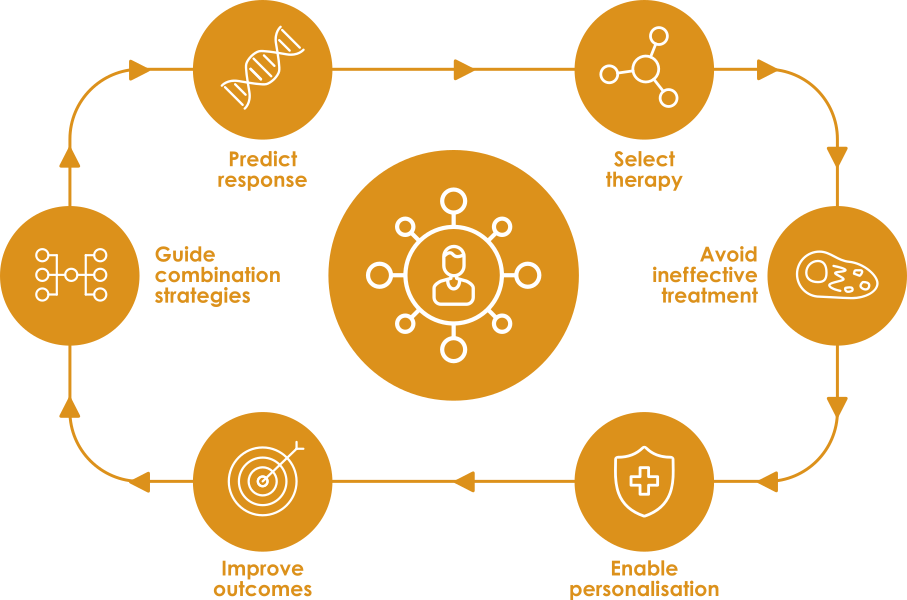
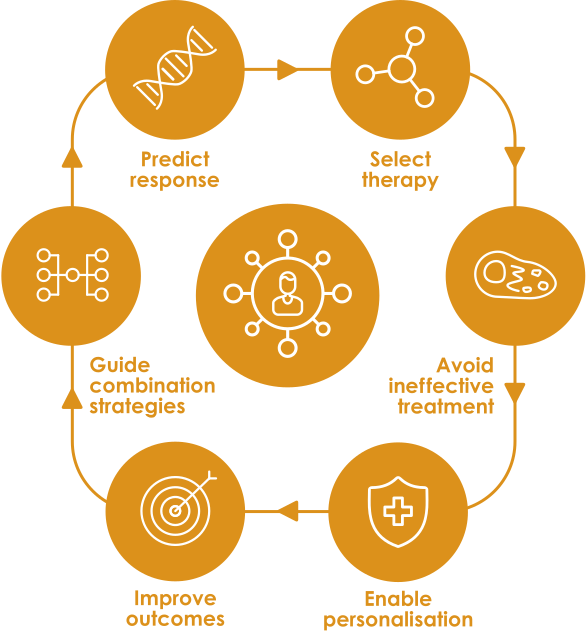
Liver cancer can vary a lot from person to person at the genetic level. In a significant proportion of patients, the disease is driven by specific genetic alterations that can be directly targeted with modern therapies. As a result, doctors are increasingly recommending detailed molecular testing, particularly in advanced disease, as it may identify actionable biomarkers, meaning changes in the tumour that may guide more personalised treatment options3,4.
Fibroblast growth factor receptor 2 (FGFR2) fusions or rearrangements are identified in approximately 10-16% of intrahepatic cholangiocarcinomas (a type of bile duct cancer that starts inside the liver)5. These alterations cause cancer cells to receive constant ”grow and survive” signals, almost like a switch that is permanently stuck in the ”on” position, leading to continuous tumour growth. Targeted FGFR inhibitors, such as pemigatinib and futibatinib, can selectively block this abnormal signal and have demonstrated clinically meaningful responses in patients whose cancer has already been treated before and whose tumours carry FGFR2 changes6. These therapies are now established treatment options in advanced or metastatic intrahepatic cholangiocarcinoma carrying FGFR2 alterations3.
Mutations in isocitrate dehydrogenase 1 (IDH1) gene occur in approximately 10-15% of cholangiocarcinomas that start inside the liver (intrahepatic cases). These changes affect how cancer cells use and process energy, helping the tumour grow and survive. Because of this, IDH1 mutations can act as drivers of cancer growth4.
Targeted medicines called IDH1 inhibitors, such as ivosidenib, can specifically interrupt this altered process and slow disease progression. In fact, clinical trials have shown their benefit in selected patients with advanced disease7.
A small subset of intrahepatic cholangiocarcinomas (approximately 1-2%) have changes in the body’s natural DNA repair system, known as mismatch repair deficiency (dMMR) or microsatellite instability-high (MSI-H) status. When this repair system does not work properly, cancer cells accumulate many DNA changes, making them easier for the immune system to recognise. Although uncommon, this subgroup is clinically important because these tumours are often highly sensitive to immunotherapy3,4. Accordingly, immune checkpoint inhibitors such as pembrolizumab may produce durable responses in MSI-H/dMMR disease4.
Activating Raf murine sarcoma viral oncogene homolog B (BRAF) V600E mutations occur in approximately 3-5% of cholangiocarcinoma cases8,9. These mutations act like a stuck ”on” switch, sending continuous signals that tell cancer cells to grow and divide, resulting in tumour growth4. Targeted treatment combinations using BRAF inhibitors (such as dabrafenib) together with mitogen-activated protein (MEK) inhibitors (such as trametinib) have shown meaningful clinical activity in previously treated patients with BRAF V600-mutated disease and are increasingly recognised as important treatment options for this group of patients4,10.
Some cholangiocarcinomas (about 5-20% of cases), particularly those that develop outside the liver or in the gallbladder, have high levels of a protein called Human Epidermal Growth receptor 2 (HER2)4,11. HER2 acts like an antenna on the surface of cells, receiving signals that help them grow and divide. When too much HER2 is present, cancer cells may receive stronger growth signals, which can help the tumour grow. In HER2-positive disease, anti-HER2 therapies such as trastuzumab, often combined with chemotherapy or other targeted agents, have demonstrated encouraging activity in clinical studies and are increasingly being incorporated into treatment strategies4.
A very small number of cholangiocarcinomas have genetic changes called neurotrophic tyrosine receptor kinase (NTRK) gene fusions, found in up to about 3.5% of patients. Despite their rarity, these alterations are clinically important because they can be effectively targeted with TRK inhibitors such as larotrectinib and entrectinib, often leading to significant and rapid responses regardless of tumour origin3.
Emerging and less established biomarkers
Beyond the clinically established targets, liver cancer frequently carries additional molecular alterations including KRAS, TP53, CDKN2A/B, SMAD4, MET amplification, BRCA mutations, RET gene fusions, and PIK3CA mutations3,4,8,9. Currently, most of these alterations are used mainly to improve our understanding of how the cancer may behave, rather than to guide treatment decisions. However, research is ongoing, and some may become important treatment targets in the future.
The molecular profile of cholangiocarcinoma can vary considerably depending on tumour location (intrahepatic, perihilar, or distal) and histological subtype3,4. This molecular heterogeneity highlights the importance of broad biomarker testing. Comprehensive genomic profiling (broad testing that looks for many genetic changes in the tumour at the same time) may identify potentially targetable alterations in up to 40% of patients3,4. In particular, some patients have changes in genes involved in DNA repair, the body’s natural system for fixing damage in genetic material. These alterations are found in around 25-30% of biliary tract cancers and may help identify patients who could benefit from certain treatments, such as platinum-based chemotherapy or poly (ADP-ribose) polymerase (PARP) inhibitors4. However, many of these approaches remain investigational in cholangiocarcinoma.
Overall, while these emerging biomarkers are improving our understanding of cholangiocarcinoma biology and expanding future therapeutic possibilities, many are not yet routinely used to guide standard clinical decision-making. Their current role is mainly within comprehensive genomic profiling, clinical trials, and research settings.
1. Kim, H., Jang, M. & Kim, E. Exploring the Multifunctional Role of Alpha-Fetoprotein in Cancer Progression: Implications for Targeted Therapy in Hepatocellular Carcinoma and Beyond. Int. J. Mol. Sci. 26, 4863 (2025).
2. Lee, W.-C. Value of alpha-fetoprotein in hepatocellular carcinoma. Transl. Gastroenterol. Hepatol. 6, 52–52 (2021).
3. Rodrigues, P. M. et al. Next-Generation Biomarkers for Cholangiocarcinoma. Cancers (Basel). 13, 3222 (2021).
4. Nishida, N. Biomarkers and Management of Cholangiocarcinoma: Unveiling New Horizons for Precision Therapy. Cancers (Basel). 17, 1243 (2025).
5. Saoudi Gonzalez, N., Patelli, G. & Crisafulli, G. Clinical Actionability of Genes in Gastrointestinal Tumors. Genes (Basel). 16, 1130 (2025).
6. Abou-Alfa, G. K. et al. Pemigatinib for previously treated, locally advanced or metastatic cholangiocarcinoma: a multicentre, open-label, phase 2 study. Lancet Oncol. 21, 671–684 (2020).
7. Abou-Alfa, G. K. et al. Ivosidenib in IDH1-mutant, chemotherapy-refractory cholangiocarcinoma (ClarIDHy): a multicentre, randomised, double-blind, placebo-controlled, phase 3 study. Lancet Oncol. 21, 796–807 (2020).
8. Silverman, I. M. et al. Clinicogenomic Analysis of FGFR2-Rearranged Cholangiocarcinoma Identifies Correlates of Response and Mechanisms of Resistance to Pemigatinib. Cancer Discov. 11, 326–339 (2021).
9. Mosele, F. et al. Recommendations for the use of next-generation sequencing (NGS) for patients with metastatic cancers: a report from the ESMO Precision Medicine Working Group. Annals of Oncology 31, 1491–1505 (2020).
10. Macias, R. I. R. et al. The Search for Risk, Diagnostic, and Prognostic Biomarkers of Cholangiocarcinoma and Their Biological and Clinicopathologic Significance. Am. J. Pathol. 195, 422–436 (2025).
11. Rimassa, L. et al. New systemic treatment paradigms in advanced biliary tract cancer and variations in patient access across Europe. The Lancet Regional Health – Europe 50, 101170 (2025).