
From Prevention to Precision: AIDA Showcases the Future of Gastric Cancer Care at the DiCE Masterclass 2026
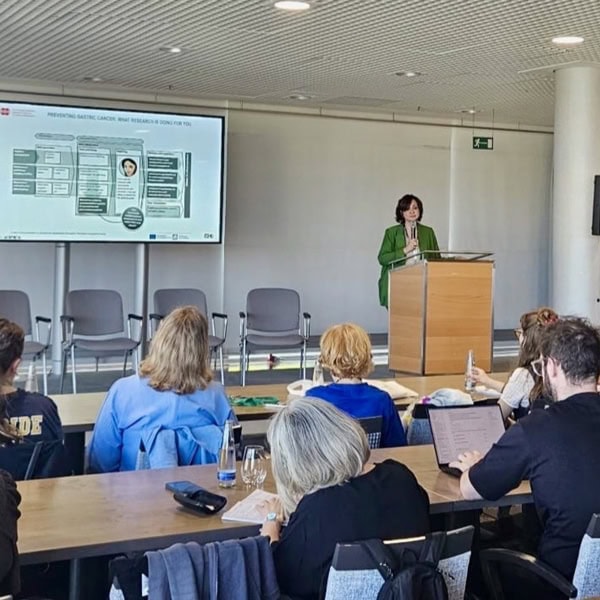
At the DiCE Masterclass 2026, held alongside ESMO GI 2026 in Munich, Prof. Tania Fleitas Kanonnikoff, Coordinator of the European AIDA Project, shared an inspiring presentation on the latest advances in oesophageal and gastric cancer and, most importantly, what they mean for patients.
Research in digestive cancers is advancing rapidly. New treatment approaches, including immunotherapy combined with chemotherapy, are improving outcomes for many people diagnosed with gastric cancer. At the same time, scientists are identifying biomarkers that can help personalise treatments, ensuring patients receive the therapies that are most likely to benefit them.
While these advances are encouraging, Prof. Fleitas Kanonnikoff reminded attendees that prevention and early detection remain our most powerful tools.
The AIDA project is developing an AI-powered clinical assistant to help healthcare professionals identify precancerous gastric conditions, assess individual risk and support earlier intervention. By bringing together information from clinical guidelines, Helicobacter pylori management, endoscopy, pathology images and molecular (“multi-omics”) data, AIDA aims to provide healthcare professionals with personalised recommendations based on each patient’s risk profile.
Ultimately, this means:
- Patients could receive earlier identification of risk factors, personalised recommendations and better long-term monitoring.
- Healthcare professionals could benefit from decision-support tools based on the latest scientific evidence.
- Researchers could gain new insights into biomarkers and strategies for more targeted screening programmes.
Beyond discussing technological innovation, Prof. Fleitas Kanonnikoff shared a message that resonated strongly throughout the DiCE Masterclass and the DiCE activities in Munich:
“Exercise and a healthy lifestyle are a must to prevent cancer.”
While research continues to transform how digestive cancers are diagnosed and treated, maintaining a healthy lifestyle remains one of the most effective ways to reduce cancer risk. Regular physical activity, a balanced diet, avoiding tobacco, limiting alcohol consumption and participating in recommended screening programmes can all make a meaningful difference.
This message also reflected the spirit of the DiCE Fun Run & Walk, where patients, healthcare professionals, researchers and advocates came together to celebrate healthy living and raise awareness of digestive cancers.
Because the best cancer care starts long before diagnosis.
Author:
