
Clear Words Are Not Enough: What Patient-Friendly Communication Really Means
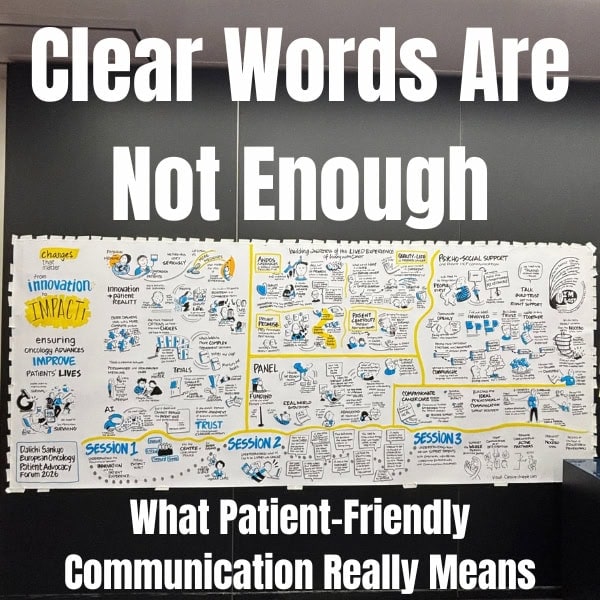
At the Fourth European Oncology Patient Advocacy Forum in Munich, one question stayed with me: is using lay language the same as communicating in a patient-friendly way?
The short answer is no.
Plain language is essential. Replacing medical terminology with familiar words can make information easier to understand. But simpler words alone do not guarantee better communication. A conversation can be technically clear and still leave someone confused, overwhelmed or excluded from decisions about their care.
Imagine receiving a cancer diagnosis. Alongside the clinical information come deeply personal questions. What does this mean for me? Will the treatment work? How will this affect my family, my work and my daily life?
In that moment, even a carefully worded explanation may be difficult to absorb. A person may remember one sentence and miss the next. This is not a failure to understand. It reflects the amount and emotional weight of the information they are being asked to process.
Patient-friendly communication begins with the person, not the script. It considers what they need to know now, what can wait and how much information they can take in. It creates time for questions, checks understanding respectfully and recognises when someone needs a pause.
Sometimes, an explanation will need to be repeated at a later appointment. A clear written summary may help. Some people may want a family member or carer involved, while others may prefer to receive information privately. No single approach works for everyone.
Listening is just as important as explaining. Two people with the same diagnosis may have very different concerns, priorities and preferences. One may want detailed information immediately. Another may need the key facts first and more detail later. Communication cannot be patient-centred if the person has no opportunity to say what matters to them.
At DiCE, putting patients at the centre of care means more than offering treatment choices. Medical advances may create new options, but those options become meaningful only when people understand the possible benefits, risks and effects on their daily lives. Patients need time, support and a fair opportunity to ask questions and participate in decisions to the extent they choose.
Good communication should not be measured simply by whether the words were easy to understand. We should also ask whether the information was timely and relevant. Did the person feel heard? Were their questions answered? Did they leave knowing what would happen next?
Communication is not an addition to cancer care. It is part of the care people receive. Clear words open the conversation. Patient-friendly communication makes that conversation useful, humane and genuinely shared.
Context: This article draws on discussions at the Fourth European Oncology Patient Advocacy Forum in Munich, organised by Daiichi Sankyo.
Author:
