
DiCE at the AIDA General Assembly 2026 and AI for Healthcare Event in Genoa
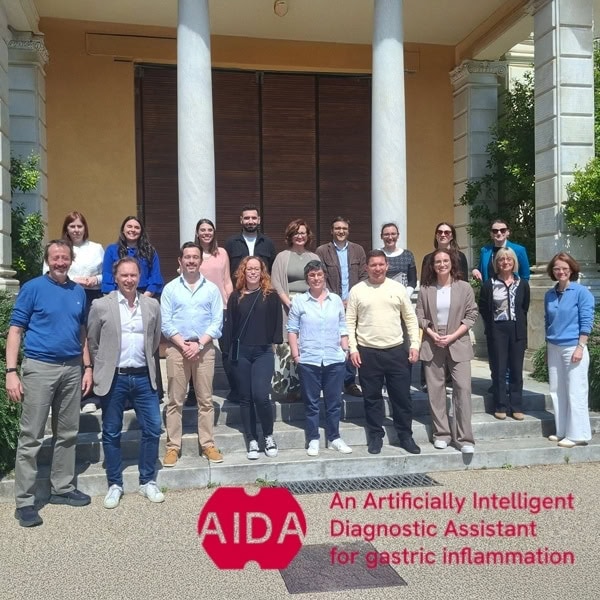
In April 2026, Digestive Cancers Europe (DiCE) joined partners in Genoa, Italy, for two important events focused on the future of artificial intelligence in gastric cancer prevention and healthcare innovation: the AIDA General Assembly and the “AI for Healthcare, Longevity & Wellness” event.
Advancing Gastric Cancer Prevention Through AI
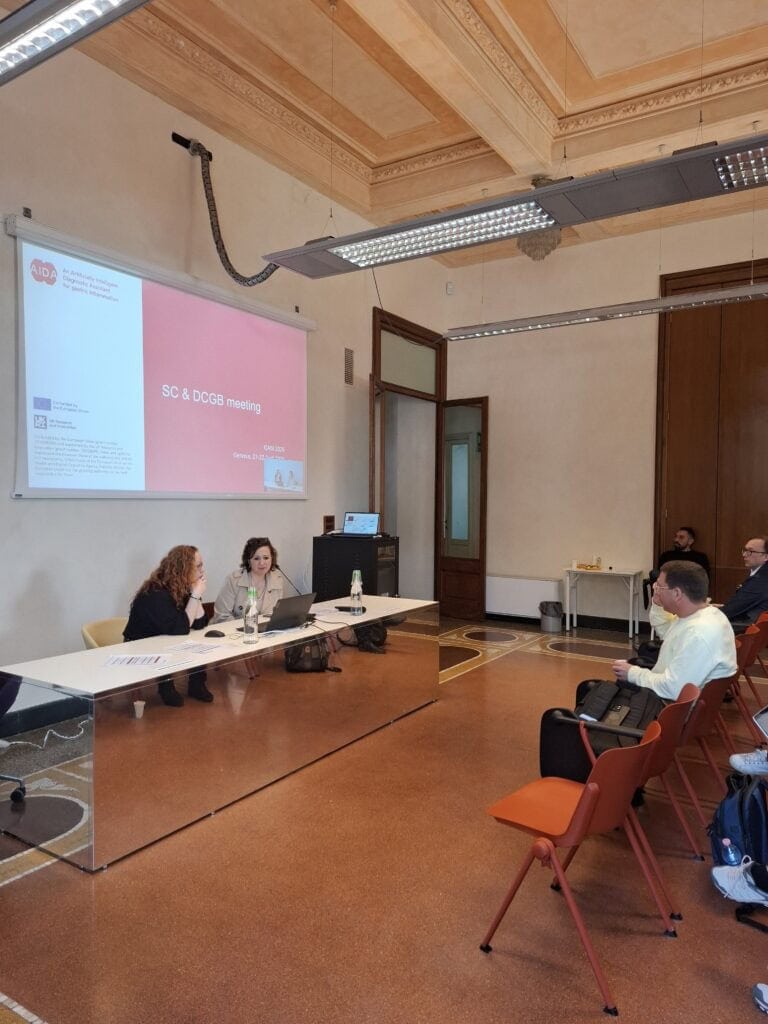
Held on 21–22 April, the AIDA General Assembly brought together partners from across Europe to review progress, share results, and discuss the next steps of the AIDA project.
Over two days of scientific and strategic discussions, consortium members explored key developments across several areas of the project, including:
• identifying individuals affected by Helicobacter pylori
• detecting precancerous gastric lesions using AI analysis of endoscopy images and pathology slides
• developing AI-driven biomarker and molecular profiling tools
The long-term goal of AIDA is to integrate these advances into a comprehensive AI-supported diagnostic tool that helps clinicians detect gastric inflammation and related conditions earlier and more accurately, ultimately contributing to gastric cancer prevention.
Partners also discussed the sustainability of the newly established AIDA Association, including opportunities for long-term collaboration, fundraising, stakeholder engagement, and impact beyond the project’s lifetime.
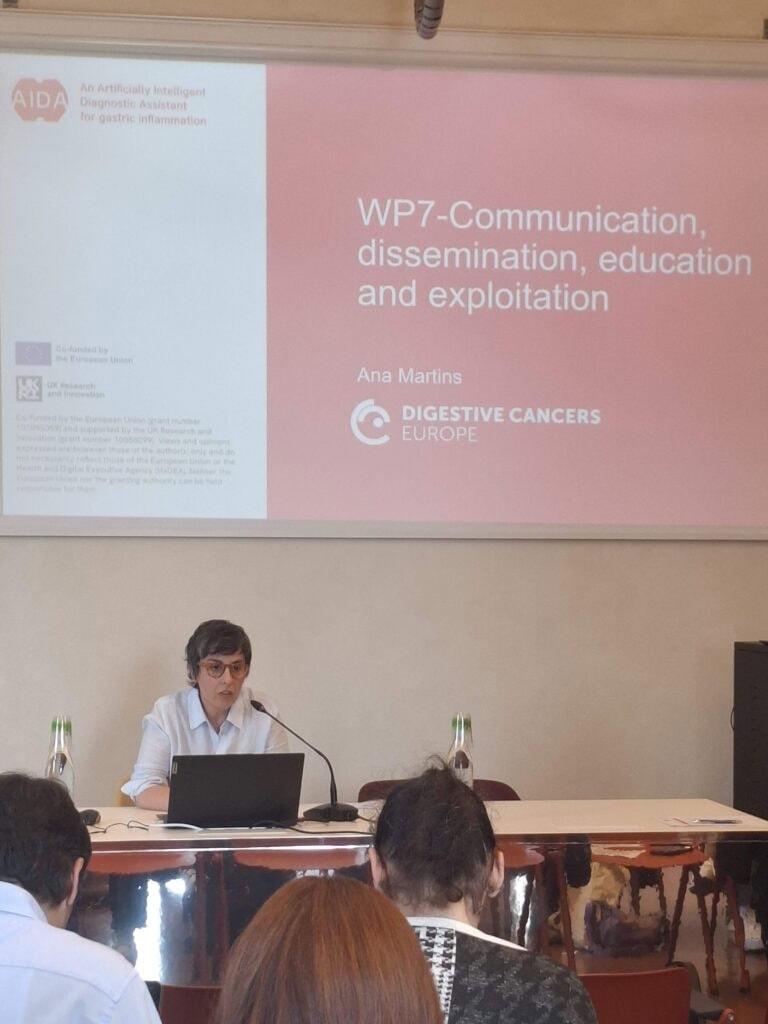
Representing DiCE, Ana Martins presented updates from the communication, dissemination, education, and exploitation work package, which is led by DiCE. Her presentation highlighted the strong growth in AIDA’s digital outreach over the past three years, including the project website, social media channels, and engagement with the DiCE newsletter.
Educational initiatives were also showcased, including webinars, awareness activities, and patient information materials designed to make complex scientific topics more accessible to broader audiences. New communication strategies aimed at further bridging the gap between scientific research and the public were also presented.
Looking ahead, upcoming activities will include launching the new AIDA podcast series and developing an educational programme for clinicians to test and explore the AIDA AI tool in practice.
AI for Healthcare, Longevity & Wellness Event
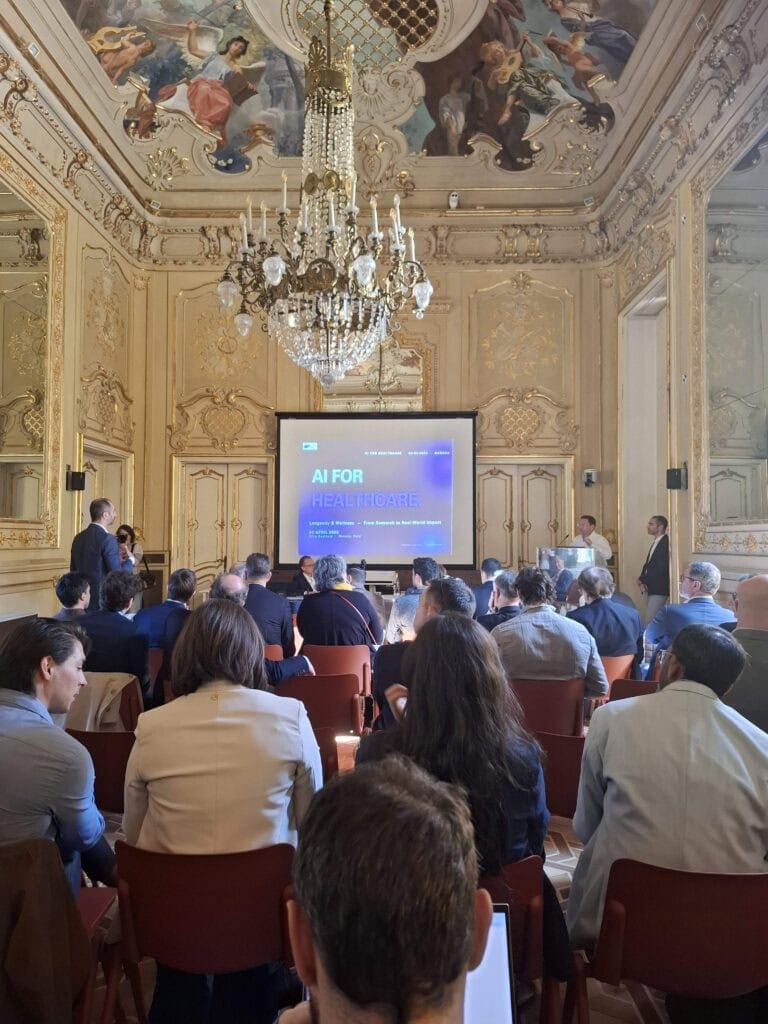
On 23 April, Genoa also hosted the “AI for Healthcare, Longevity & Wellness” event, organised by Fusion AI Labs, an applied research centre dedicated to transforming advanced AI research into practical healthcare solutions.
The event brought together leading clinicians, researchers, innovators, and healthcare organisations to discuss topics including clinical decision-making, AI regulation, and the translation of research into real-world hospital settings.
During the event, the AIDA project was presented as an example of how AI can support clinicians in detecting precancerous gastric lesions, guiding personalised treatment approaches, and improving gastric cancer prevention strategies.
Professor Kiril Veselkov from Imperial College London highlighted the urgent need to address rising gastric cancer mortality rates and demonstrated how European clinical data is being used to train AI models to support more personalised patient care.
Antonello Scalmato from Stratejai focused on the practical implementation of these technologies, presenting a connected AI-driven system designed to support clinicians throughout the patient pathway. This includes tools for endoscopy risk evaluation, earlier identification of high-risk patients, and features that streamline clinical workflows and support decision-making.
By integrating these innovations into clinical practice, the AIDA project aims to improve diagnostic accuracy, optimise patient management, and strengthen prevention efforts for gastric cancer across Europe.
To stay updated on the latest project developments, visit the AIDA website and follow AIDA on social media.

Author:
