
A Turning Point Before Surgery: CASSANDRA Redefines Neoadjuvant Therapy in Pancreatic Cancer
Important new evidence has emerged from clinical research in pancreatic cancer. On 20 November 2025, The Lancet, together with the New England Journal of Medicine and JAMA, world’s leading medical journals, published the results of the CASSANDRA (PACT-21) phase III clinical trial, which compared two neoadjuvant chemotherapy regimens for patients with resectable or borderline resectable pancreatic cancer.
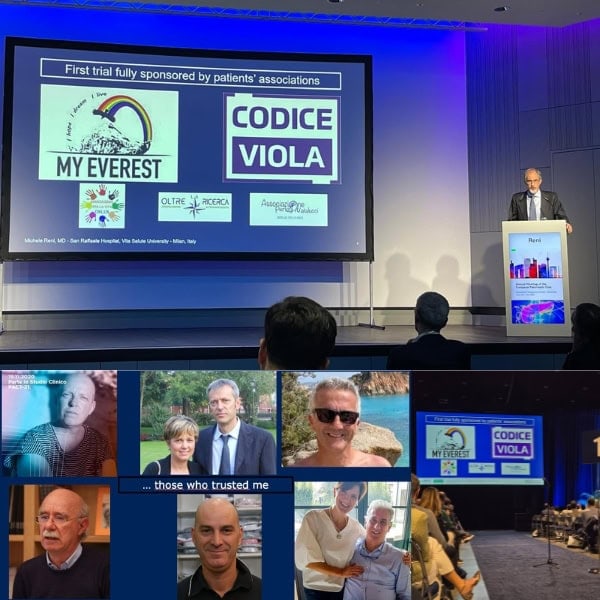
The study, coordinated by the IRCCS San Raffaele Hospital in Milan and conducted across 17 high-volume Italian centres, represents a notable example of independent clinical research. The trial was fully funded by patient organisations, particularly MyEverest and Codice Viola.
The results show that the chemotherapy regimen PAXG significantly outperforms mFOLFIRINOX, one of the most widely used treatment options in this setting.
Why treatment before surgery matters
For patients with non-metastatic pancreatic cancer, neoadjuvant therapy—chemotherapy given before surgery—is becoming an increasingly important part of the treatment strategy.
This approach can:
- treat potential microscopic metastases that are not yet detectable
- reduce the risk of early disease spread
- increase the likelihood of successful surgery
- help identify patients who are most likely to benefit from surgical treatment
The CASSANDRA trial was designed to determine which chemotherapy regimen provides the best outcomes when used before surgery.
What type of study is CASSANDRA (PACT-21)?
CASSANDRA is a phase III clinical trial, representing the highest level of evidence before treatments can be adopted into routine clinical practice.
The study has several key characteristics:
- Independent: fully funded by patient organisations and therefore by the patient community.
- Randomised: patients were randomly assigned to one of the two treatment groups, helping reduce bias and ensure reliable results.
- Phase III: designed to compare treatments and confirm which approach is more effective before it becomes standard practice.
- Multicentre: conducted in 17 hospitals across Italy, ensuring broader representation of patients and clinical settings.
- Open-label: both doctors and patients knew which treatment was being administered.
- 260 participants: all diagnosed with resectable or borderline resectable pancreatic cancer.
How the study was conducted
The trial enrolled 260 patients with resectable or borderline resectable pancreatic cancer.
Participants were randomly assigned to receive one of two treatment regimens:
mFOLFIRINOX
- fluorouracil
- leucovorin
- irinotecan
- oxaliplatin
PAXG
- cisplatin
- nab-paclitaxel
- gemcitabine
- capecitabine
After four months of chemotherapy, patients underwent a second randomisation. Some patients received four months of chemotherapy followed by surgery and two additional months of treatment, while others completed six months of chemotherapy before surgery. This design allowed researchers to explore the best timing for surgery within the treatment strategy.
The primary endpoint of the trial was event-free survival (EFS), defined as the time before any of the following events occurred:
- disease progression during therapy
- inability to proceed to surgery
- development of metastases
- recurrence after surgery
- significant increase in the tumour marker CA19-9
- death
Key findings
The study demonstrated that PAXG significantly improved outcomes compared with mFOLFIRINOX.
Key results include:
Median event-free survival
- PAXG: 16.0 months
- mFOLFIRINOX: 10.2 months
PAXG reduced the risk of events by 37%.
The probability of remaining free from progression or recurrence at three years was also substantially higher:
- 33% with PAXG
- 13% with mFOLFIRINOX
In addition, PAXG showed:
- greater reduction of the tumour marker CA19-9
- better radiological tumour response
- a higher rate of surgery with less residual disease
- fewer early metastatic events
Treatment tolerability and quality of life
As with most chemotherapy regimens, both treatments were associated with side effects.
Overall patterns included:
PAXG
- more neutropenia (low white blood cell count)
- more skin toxicity, including hand-foot syndrome
mFOLFIRINOX
- more nausea and diarrhoea
- higher rates of peripheral neuropathy
- more stomatitis
- greater liver toxicity
Importantly, patients treated with PAXG experienced fewer treatment interruptions, and some aspects of quality of life were less negatively affected compared with mFOLFIRINOX.
What this means for patients
These findings suggest that PAXG could become a new neoadjuvant standard of care for patients with resectable or borderline resectable pancreatic cancer who are younger than 75 and in good general health.
Improving disease control before surgery may increase the chances of a successful operation and extend the period during which the disease remains under control.
Data on overall survival are still maturing, but early results already show a favourable trend for PAXG (32.1 months versus 26.4 months).
A powerful example of patient-driven research
The CASSANDRA trial also highlights the crucial role that patient organisations can play in advancing cancer research.
By supporting independent clinical trials, patient groups help generate evidence that can directly improve treatment strategies and outcomes.
Although pancreatic cancer remains one of the most challenging cancers to treat, the results of the CASSANDRA study represent a meaningful step forward and offer new hope for patients eligible for surgery.
Author:
