
From Blood Tests to Better Decisions: GUIDE.MRD Advances the Future of Personalised Cancer Care
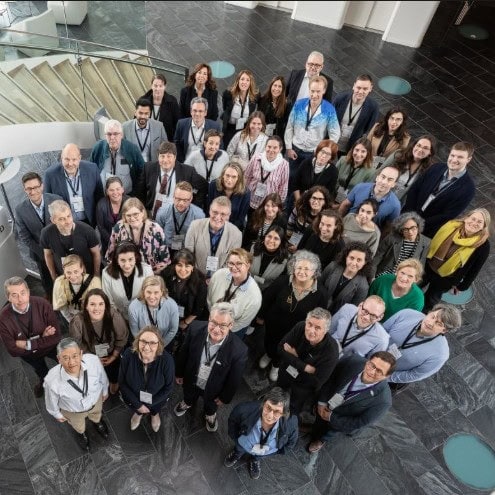
On 5–6 May 2026, partners from across Europe gathered at the Bristol Myers Squibb Collaboration Hub in Boudry, Switzerland, for the 4th General Assembly of the GUIDE.MRD project. Bringing together experts from academia, patient organisations, diagnostics, and the pharmaceutical industry, the meeting highlighted both the scientific progress and the real-world challenges involved in bringing liquid biopsy closer to routine cancer care.
GUIDE.MRD aims to improve care for people living with colorectal, pancreatic, and lung cancers by using liquid biopsy, a simple blood test that detects circulating tumour DNA (ctDNA). By identifying minimal residual disease (MRD), meaning tiny traces of cancer that may remain in the body after treatment, liquid biopsy has the potential to transform how cancer recurrence is monitored and treated.
Detecting these traces early could help doctors make more informed and personalised treatment decisions. It may identify which patients could benefit from additional treatment, while helping others avoid unnecessary therapies and their associated side effects. Most importantly, it could allow cancer recurrence to be detected at the earliest possible stage.
One of the project’s key achievements so far has been the development of reference standard materials designed to benchmark liquid biopsy tests. These standards are essential for comparing and validating different testing approaches, helping ensure that results are reliable, accurate, and clinically meaningful across healthcare systems.
Alongside the scientific discussions, the General Assembly reinforced the project’s shared ambition to improve outcomes for patients by:
- reducing unnecessary treatments
- detecting cancer recurrence earlier
- supporting more personalised care decisions
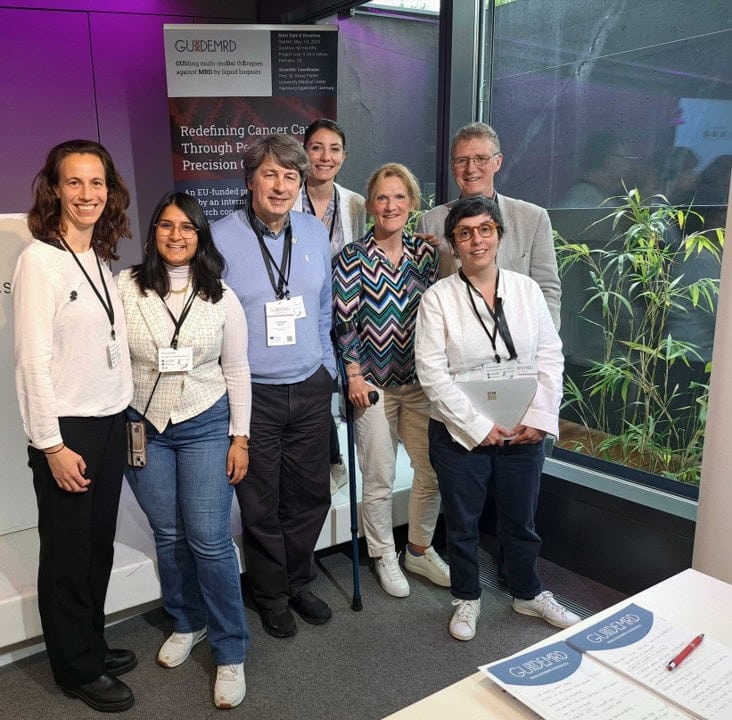
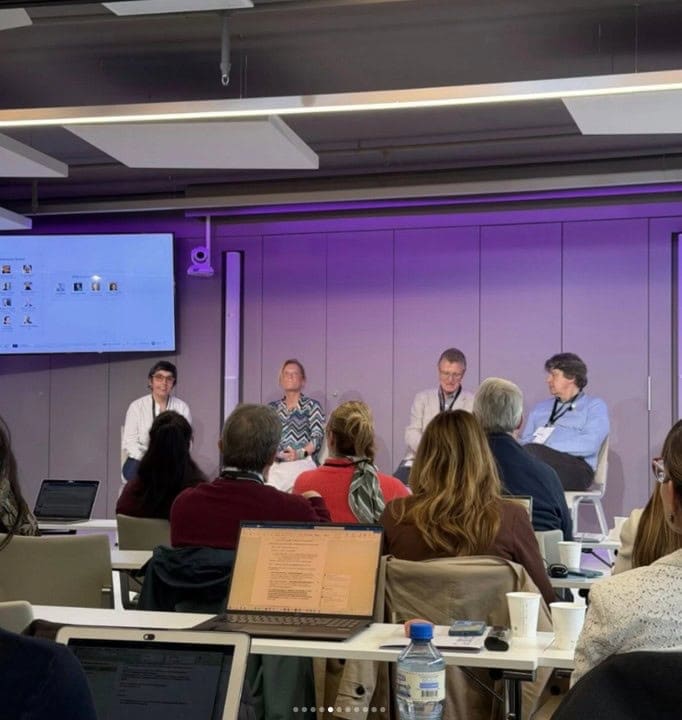
Digestive Cancers Europe continues to play an active role in ensuring the patient perspective remains central throughout the project. During the meeting, Ana Martins moderated the Patient Advisory Board session together with DiCE member Stephen Rowley and representatives from Lung Cancer Europe, including Merel Hennink and Alexandre Brutti.
The discussion served as a strong reminder that liquid biopsy is not only an emerging technology but also a potential tool for empowering patients and healthcare professionals to make better, more informed, and shared treatment decisions. Participants also highlighted that achieving meaningful implementation will require continued collaboration between patients, healthcare professionals, policymakers, regulators, academia, and industry partners.
GUIDE.MRD stands out as a truly patient-centred initiative, where patient voices are treated as equal and essential contributors to innovation. As highlighted during the meeting, “Hearing directly from patients brings a vital perspective that grounds and guides our work. Their insights are not only inspiring but essential to shaping meaningful innovation in cancer care.”

Author:
