
TOGAS Closes in Riga: Shaping the Future of Gastric Cancer Prevention in Europe
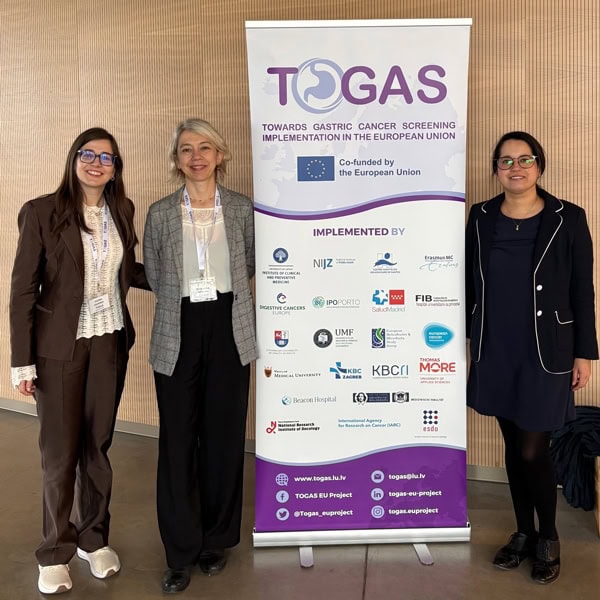
On 11 May 2026, the Towards Gastric Cancer Screening Implementation in the European Union (TOGAS) consortium met in Riga, Latvia, for the project’s closing meeting. The hybrid event brought together project partners from across Europe, alongside representatives from the Health and Digital Executive Agency (HaDEA), the European Commission’s Directorate-General for Health and Food Safety (DG SANTE), and members of the External Advisory Board. The meeting marked an important milestone for the project, offering an opportunity to review the results from the past years and reflect on how these findings can support future gastric cancer prevention and screening strategies in Europe.
A comprehensive overview of Europe’s efforts in gastric cancer prevention
Throughout the day, partners presented results from all major work packages, covering pilot studies, population surveys, modelling work, and evaluation of activities.
Partners from the International Agency for Research on Cancer (IARC) shared recommendations on best practices for implementing population-based Helicobacter pylori (H. pylori) “screen-and-treat” programmes. These recommendations emphasised the importance of ensuring strong governance, appropriate diagnostic strategies, effective treatment pathways, and careful monitoring of antibiotic resistance.
Partners from the National Institute of Public Health (NIJZ, Slovenia) and the University of Latvia presented results from the three TOGAS pilot studies, which explored different approaches to gastric cancer prevention across Europe, including H. pylori screening in young adults, combined upper and lower gastrointestinal cancer screening, and long-term follow-up after H. pylori eradication. These studies provided valuable insights into feasibility, recruitment, and real-world implementation across multiple countries.
Partners from Erasmus MC (the Netherlands) presented cost-effectiveness modelling of H. pylori screening strategies across different European settings and birth cohorts, highlighting how test performance, prevalence, and cost assumptions influence screening feasibility. Partners from CHU Nantes (France) provided updates on the evaluation of activities, study oversight, ethical monitoring, and deliverables for the interim and final project evaluations.
The External Advisory Board provided strategic reflections on the overall project progress, emphasising the importance of ensuring that project results continue to have an impact beyond the end of TOGAS, including through joint publications and policy translation.
Across all presentations, a consistent message emerged: while scientific evidence is essential, successful implementation of gastric cancer screening will also depend on communication, trust, equity, and healthcare system capacity.
Bringing the patient and public perspective into focus
DiCE was proud to contribute to several key moments of the meeting, ensuring that the patient and public perspective remained central to the discussion and to future screening implementation. DiCE contributed with three main presentations that highlighted this dimension from different angles.
First, Juliana Calheiros presented evidence from patient feedback surveys targeting the TOGAS pilot study participants. These surveys explored how participants experienced and evaluated the novel screening and prevention approaches tested across multiple European centres. This work is important because screening programmes can only succeed if they are not only scientifically comprehensive but also understandable, acceptable, and manageable for the people invited to take part.
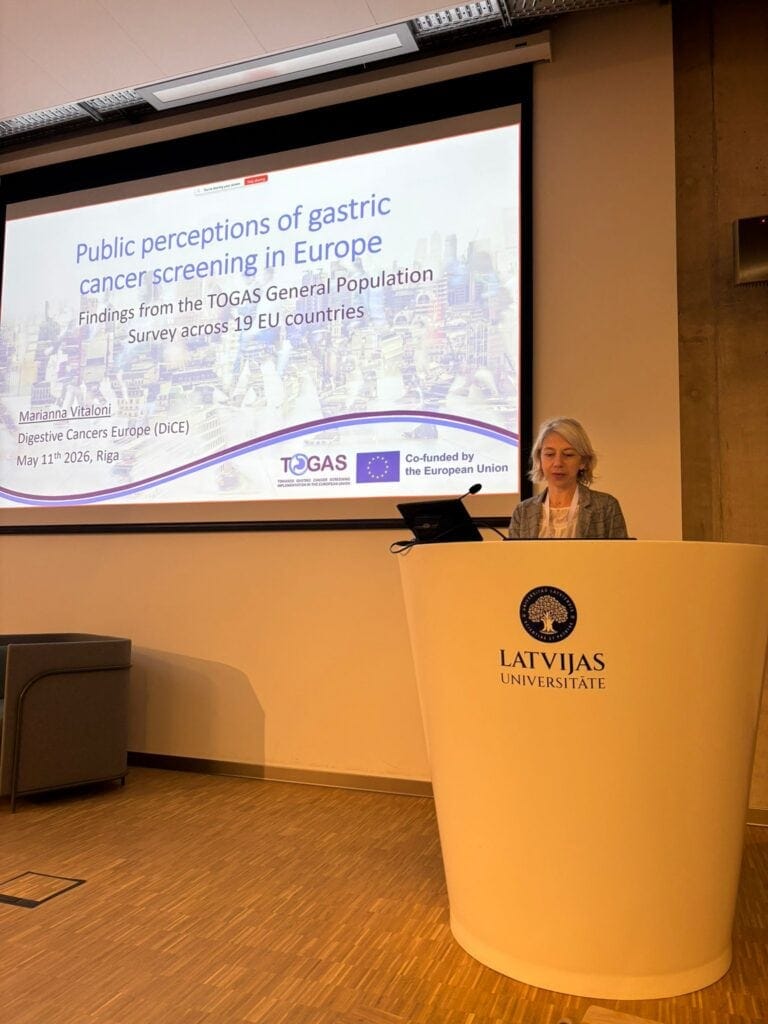
Furthermore, Marianna Vitaloni presented results from the general population survey, which captured the views of over 20,000 citizens across Europe. The results brought wider public perspectives into the conversation, helping to better understand how people perceive gastric cancer testing, their willingness to participate in gastric cancer screening programmes, the main factors influencing participation decisions, and their preferred communication channels for reaching target populations. This is essential for designing future programmes that respond to real-world needs and concerns.
Later in the day, Laura Ureña presented an update on Communication and Dissemination activities, highlighting how TOGAS has shared project information, educational content, partner updates, and awareness messages with different audiences throughout the project. She also highlighted the need for coordinated dissemination of TOGAS results as they become available, ensuring that findings reach the right audiences in a clear, accessible, and timely way. This is relevant, as the project’s results can only have an impact if they are communicated in a form that the public, professionals, and policymakers can understand and use.
For DiCE, this closing meeting was an important opportunity to reflect on the project’s achievements and to underline a key message: future gastric cancer screening strategies must be built not only on clinical evidence, but also on the experiences, expectations, and voices of patients, citizens, and communities.
As TOGAS moves into its final stage, DiCE will continue to support the dissemination of project results and help ensure they are understandable and useful for patients, healthcare professionals, policymakers, and the wider public.
Authors:

