
KI-COMPASS: Using AI to Transform Follow-Up Care After Gastroesophageal Cancer
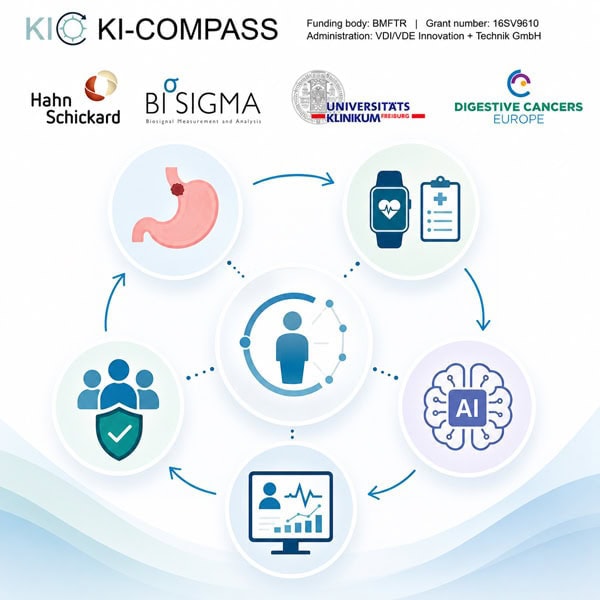
For people treated for gastroesophageal adenocarcinoma (GEAC), follow-up care has traditionally focused on detecting whether the cancer returns. Yet many people continue to face long-term health challenges related to their treatment, including cardiovascular complications that are not routinely monitored. The KI-COMPASS project is working to change this by exploring how artificial intelligence (AI) and digital health technologies can support more personalised, proactive follow-up care.
Combining Digital Health with Clinical Care
Wearable devices, such as smartwatches, can continuously collect health information including heart rate, physical activity, sleep patterns and other physiological data. KI-COMPASS is investigating how these real-world data can be combined with routine clinical information to provide a more complete picture of a person’s health.
Using AI, the project aims to identify individual risk patterns and support risk adapted follow-up care, helping healthcare professionals recognise emerging health issues earlier and tailor care to each patient’s needs.
How the Study Works
The project consists of two complementary studies.
The first analyses routine clinical data from people treated for GEAC at the University Hospital Freiburg between 2015 and 2025. Researchers will investigate cardiovascular complications following treatment and develop AI models capable of predicting long-term health outcomes.
The second is a prospective observational study involving people receiving routine follow-up care. Participants will wear a smartwatch that continuously collects health related information. Researchers will evaluate whether combining wearable data with routine clinical records improves the early detection of potential health risks and supports more personalised follow-up.
A Multidisciplinary Partnership
KI-COMPASS brings together expertise in oncology, cardiology, data science, artificial intelligence and patient advocacy. The consortium includes Hahn-Schickard, BiSigma GmbH, the Centre for Gastrointestinal Tumours, the Heart Centre and the Data Integration Centre at the University Hospital Freiburg, together with Digestive Cancers Europe (DiCE).
By combining clinical expertise with digital innovation, the project aims to improve long-term health outcomes and quality of life for people living with and beyond gastroesophageal adenocarcinoma.
The KI-COMPASS project is funded by the German Federal Ministry of Research, Technology and Space (BMFTR) under Grant No. 16SV9610. For more information and project updates, visit the KI-COMPASS LinkedIn page.
Author:
