
Strengthening Patient Representation at UEG Week 2026
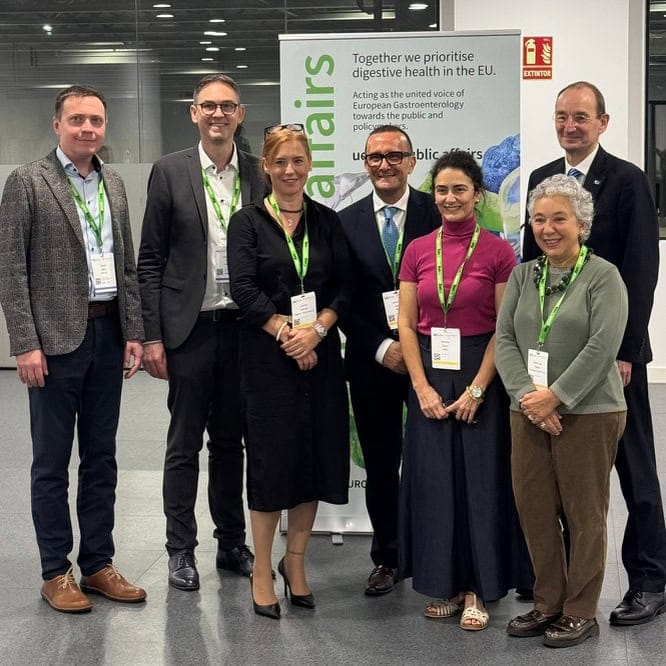
Patients’ experiences have an essential role in shaping digestive health policy and research. At UEG Week 2026 in Barcelona, that role gained a new formal platform with the launch of the UEG Patient Representatives Advisory Board, a highlight of DiCE’s participation in this year’s event.
Launched on 18 October during the Digestive Health Roundtable 2026, the UEG Patient Representatives Advisory Board (PRAB) brings together eight European patient organisations. DiCE CEO Zorana Maravic joined as DiCE’s representative, helping to bring the needs and experiences of people affected by digestive cancers into UEG’s public affairs activities and broader work.
Over the next three years, DiCE will work alongside fellow Board members to identify shared challenges across digestive diseases and ensure that patients’ perspectives inform policy, advocacy and research. The roundtable explored how to make this involvement meaningful throughout the research process, including through patient-reported outcomes.
This commitment to shaping decisions also guided DiCE’s contribution to discussions on pancreatic cancer. On the opening day, Zorana participated in the Pancreatic Cancer Europe meeting on Pancreatic Cancer Primary Prevention and Screening Interventions. Her presentation explored how to move from awareness to action through stronger prevention policies, better identification and surveillance of people at high risk, and European collaboration on early detection.
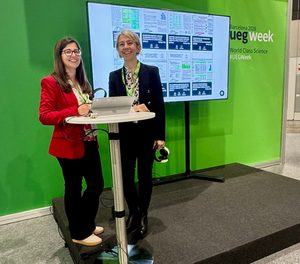
Understanding people’s experiences and preferences was also central to the research DiCE shared in the scientific programme. Juliana Calheiros and Marianna Vitaloni presented two abstracts from the EU-funded TOGAS project during the moderated poster session ‘Next-generation strategies in gastric cancer prevention and detection’.
The first study examined participants’ experiences of combined upper endoscopy and colonoscopy, and how acceptable they found it, across eight European countries. The second study explored public willingness to participate in gastric cancer screening across 19 European countries.
Together, the findings highlighted the importance of clear information, accessible screening methods and patient preferences in developing future screening programmes. They reinforced a message that connected DiCE’s research and advocacy throughout the week: people’s experiences matter when designing the services intended to support them.
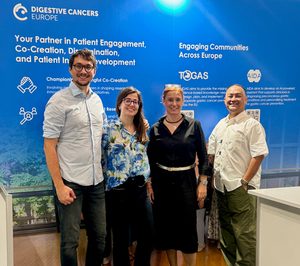
At the DiCE booth, we connected with healthcare professionals, researchers, and fellow patient advocates, shared our ongoing activities, and explored opportunities to work together. These exchanges continued the collaboration we built at last year’s event in Berlin and strengthened relationships across the digestive health community.
We thank UEG and all our partners for the opportunity to contribute. Through our role on the new Board, our advocacy and our research, we will continue working to ensure that patients help shape the future of digestive cancer care across Europe.
Author:
