
When Eating Becomes Difficult: Students Rethink Cooking During Cancer Treatment
For someone undergoing cancer treatment, a familiar meal can suddenly become difficult to manage. Favourite foods may taste unfamiliar. Nausea can make cooking smells overwhelming. Severe fatigue can make preparing dinner exhausting. These changes affect more than nutrition. They can disrupt daily routines, independence and the simple pleasure of sharing a meal.
What if future chefs considered these experiences before stepping into a professional kitchen?
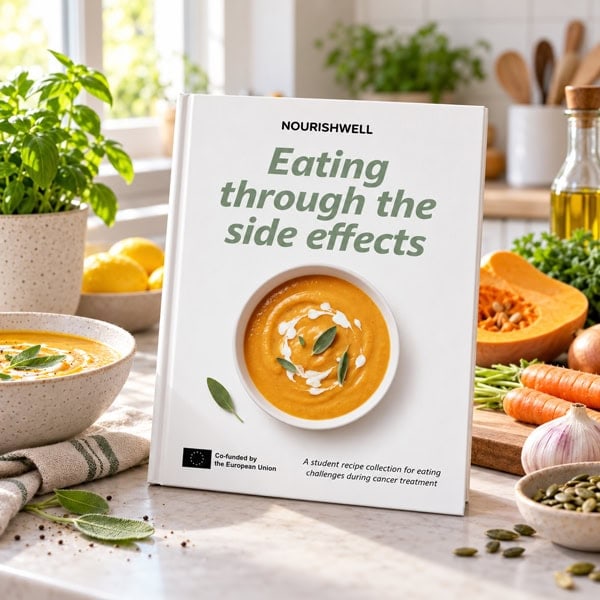
That question is at the heart of NourishWell, a European Erasmus+ project that brings together oncology, nutrition, food science and gastronomy. Coordinated by Croatia’s Institute for Gastroenterological Tumours (IGET), the project has produced a student cookbook, Eating Through the Side Effects: A Student Recipe Collection for Eating Challenges During Cancer Treatment.
Learning to see food through a patient’s eyes
The cookbook was developed by vocational students from the Food Technology School in Zagreb, Croatia, and the Vancho Pitosheski Secondary School of Hospitality and Tourism in Ohrid, North Macedonia.
Their assignment went beyond creating appealing dishes. Over four weeks, students explored how cancer treatment can change a person’s relationship with food. They considered practical questions such as what someone might manage to eat with little energy, how changes in taste influence food choices, and why texture or serving temperature may matter.
Students then moved from research to the teaching kitchen, preparing and tasting dishes, gathering feedback and refining their ideas. The aim was to connect scientific knowledge with empathy and practical cooking skills.
Recipes built around everyday challenges
Five student groups in Zagreb each focused on a different eating difficulty: extreme fatigue, loss of appetite, taste changes, diarrhoea, or nausea and vomiting. Each developed three-day menus with recipes that reflected its chosen challenge.
The collection includes ideas such as berry Greek yoghurt and vegetable soup in menus addressing fatigue. For reduced appetite, students proposed dishes including creamy pumpkin soup and semolina with cocoa. Other recipes explore moisture, flavour, and presentation, from pasta with avocado cream for altered taste to cold fruit preparations in menus designed around nausea.
Students in Ohrid contributed three more days of menus, featuring dishes such as Swiss chard omelette, vegetable lasagne, and baked salmon with quinoa and broccoli. Unlike the Zagreb chapters, these menus are not linked to individual side effects.
Together, the recipes show how small culinary decisions, including portion size, texture, aroma and preparation methods, can be considered from the perspective of someone living through treatment.
A learning resource, not a substitute for personalised advice
Importantly, the cookbook is a record of student work rather than a clinically validated meal plan. Its authors make clear that relevant culinary, nutrition, oncology, and food safety professionals should test and review the recipes before public use. People receiving cancer treatment may have very different dietary requirements and food tolerances, so individual advice from their healthcare team remains essential.
That distinction does not diminish the project’s achievement. NourishWell shows what can happen when students look beyond ingredients and consider the person who will eat the meal.
By bringing patient experience into culinary education, the project offers a thoughtful starting point for a more responsive approach to food and cancer care.
Discover the NourishWell project and its educational resources
Author:
