
Rohini's story
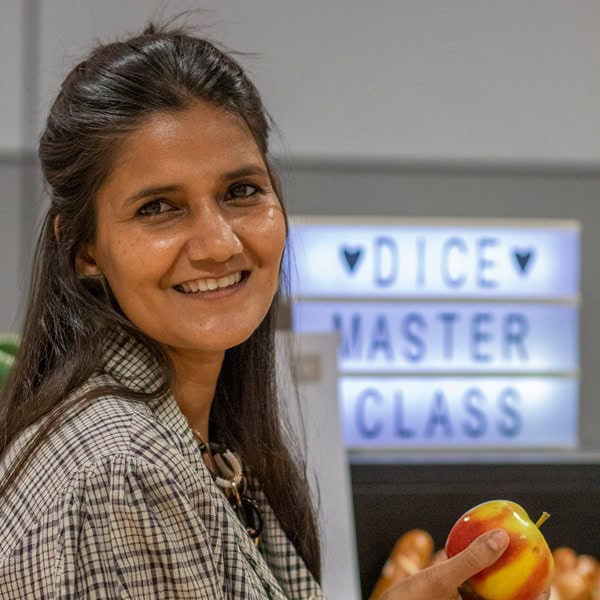
Rohini's story
I learned that there is a difference between being cured and truly healed. Healing means caring for the whole person, not just treating the disease.
My journey with cancer began in 2018, not as a patient, but as a caregiver. My younger brother was diagnosed with a rare giant cell tumour, and despite every effort to save him, we lost him at just 27 years old. His death left my family devastated and changed the course of my life.
At the time, I was practising law in India. After years of grief, I moved to Belgium in 2020 to join my husband and begin a new chapter. Soon afterwards, I became pregnant, bringing renewed hope for our future.
Then, in March 2021, everything changed.
A sudden infection caused by cholangitis led to the stillbirth of our baby boy, Victor. Losing my son was an unimaginable heartbreak. While I was trying to cope with that loss, doctors initially believed gallstones were responsible for my illness and scheduled me for gallbladder surgery. My husband and I felt something was not right, so we sought a second opinion at a university hospital.


That decision saved my life.
Further investigations revealed cholangiocarcinoma, a rare cancer of the bile ducts. Hearing the word “cancer” again, after losing my brother, was overwhelming. I had only recently moved countries, left my career, and was navigating grief, isolation, and the uncertainty of the COVID pandemic. Suddenly, I found myself facing another life-changing diagnosis before I had even begun to recover from the loss of my son.
I underwent a complex Whipple procedure because of previous biliary surgery I had as a newborn. Recovery was long and challenging. Afterwards, I received chemotherapy together with immunotherapy. There was no clear consensus about the best treatment approach, leaving my family and me to make difficult decisions at a time when every choice felt critical.
Treatment brought severe side effects, repeated infections, multiple hospital admissions, and interruptions to therapy. Eventually, chemotherapy had to be stopped while immunotherapy continued. For months, scans showed suspicious lesions, and living from one scan to the next became one of the most emotionally difficult parts of my experience.
With no family history of cancer, losing my brother and then facing my own diagnosis left us searching for answers. The physical challenges were significant, but the emotional burden was even greater. At first, I was determined to survive because I could not bear the thought of my parents losing another child. As time passed, I also wanted to live for myself.
Throughout my treatment, I was fortunate to receive exceptional medical care from specialists who went above and beyond. Their expertise saved my life. At the same time, I learned that recovery involves much more than treating the disease.
After my Whipple surgery, I struggled to find guidance on managing the long-term effects of treatment. Digestive changes, malabsorption, chronic pain, fatigue, and nutritional challenges became part of everyday life. Much of what helped me came through personal research, specialist support, and connecting with other patients who had lived through similar experiences.
That journey taught me the difference between being cured and truly healed.
I chose to become an active participant in my own recovery by learning, making lifestyle changes, and embracing an integrative approach to care. Supporting my mental, emotional, physical, social, and spiritual wellbeing became just as important as medical treatment. This approach helped me navigate grief, uncertainty, pain, and the practical realities of life after cancer.
Living with a rare cancer also showed me how important emotional support and shared experience can be. There is often no standard treatment pathway, opinions differ, and uncertainty can become a constant companion. Connecting with other Whipple patients reminded me that patients have invaluable knowledge to share, but younger people living with rare cancers often struggle to find others who truly understand their experience.
As my health gradually improved, I found myself sharing what had helped me with other patients. Those conversations became the foundation of a new purpose.
They led to the creation of RSSHeals.
At the age of 40, I chose to leave my legal career and rebuild my life through coaching, advocacy, education, mentorship, and holistic wellness. It required starting again, undertaking extensive training and professional certifications, and redefining my future, but it also gave my experience meaning.
Today, I am more than five years post-diagnosis and remain in remission, with no evidence of disease.
Cancer permanently changed my body and my life. I continue to live with long-term symptoms, regular monitoring, and uncertainty. But I have also learned that healing is not simply about surviving. It is about rebuilding a meaningful life while embracing who you have become.
Cholangiocarcinoma changed my life in ways I never imagined, but it did not define or end it. If sharing my story helps even one person feel less alone, gives someone hope, or encourages them to advocate for themselves, then every step of this journey has been worthwhile.
You can connect with me on Instagram and LinkedIn: @rohinisinghsisodia.
____________________________________
Rohini Singh Sisodia is a certified Health and Wellness Coach, patient advocate, and cholangiocarcinoma survivor. Her work is shaped by her lived experience of cancer and focuses on rare cancers in younger people, survivorship, resilience, and whole-person care. Through advocacy, coaching, education, and community programmes, she supports people living with and beyond cancer while promoting a more integrated approach to care alongside medical treatment.
In 2026, Rohini joined the Patient Advisory Committee of Digestive Cancers Europe (DiCE), where she brings the patient perspective to help strengthen DiCE’s work and ensure that the voices of people affected by digestive cancers remain central to its initiatives.
We want to hear your story
We hope that this section of our website will provide the platform and inspiration for patients/survivors to tell their own story. If you would like to contribute to this page please contact us.
Rohini
My journey with cancer began in 2018, not as a patient, but as a caregiver. My younger brother was diagnosed with a rare giant cell tumour, and des...
Luca
My name is Luca. I am Italian and 54 years old. I come from Lucania, in southern Italy. For 25 years, I worked in Milan before deciding to return h...
Romina
For years, my life was peaceful. A “simple” life, yet full: sports, healthy eating, the job I loved, and passions that filled my days—and my ...
Pamela
My name is Pamela, and I live in beautiful West Cork, Ireland. I’ve always loved the outdoors—long walks, coastal hikes, and the fresh Atlantic...

Lorenzo
At 49, I underwent a splenopancreasectomy due to a VIPoma, a rare neuroendocrine tumour in the pancreas that produces excessive VIP hormone, unlike...

Samantha
Finding Strength in the Storm: My Journey with CRC Before my cancer diagnosis, I was a busy, active mother of two, pursuing a social work degree an...

Mlađan
On January 29, 2023, sitting at home in the evening, I felt severe pain in my abdomen. I fell to the floor and writhed in almost unbearable pain wh...

Laura
In October 2022, I discovered that I had a cavernous angioma in my liver. I began feeling the first symptoms (nausea and heaviness in the stomach) ...

Emanuela
The diagnosis dates back to May 20, 2021. Leading up to that time, I had experienced some difficulties. In August 2020, I lost my mother, and the...

Claire
Two and a half years ago, I started having trouble swallowing bread and chicken; it felt like the food was getting stuck in my food pipe and wouldn...

Harry
Update 10 March 2024 A lot has changed since my first diagnosis on 27 May 2021. As mentioned in earlier updates, I was first diagnosed with ‘...

Kjell
Pancreatic Cancer Reflections: Between Hope and Despair Kjell Olof was born in 1942 in Sweden. During the summer of 2021, he began experiencing per...

Claudia
My story, like all of ours, is “unique.” I have always been labelled as “health-conscious,” sometimes with gentle irony and...

Teodora
I’m Teodora, and I’m from Romania. My story is born from grief and longing for the life I was just beginning to build with someone when...

Georgiana
To everyone reading this story, my name is Georgiana. A few months into my 34th year, I was diagnosed with mixed gastric adenocarcinoma, or, more s...

Helen
Hello, I am Helen Canning. I live in Suffolk, England, with my husband Vincent and our two daughters, Erika (6) and Marla (4). I used to have a b...

Richard
In the second half of 2016, I started experiencing symptoms such as a feeling of acid reflux and a burning in my oesophagus, some difficulty in swa...

Katell
Katell Maguet is a 43-year-old French woman who lives in The Netherlands. She shared her emotional story with colorectal cancer to give a voice to ...

Isabelle
Isabelle Chabrier is 56 years old, and lives in Paris, France. She shares her successful journey with pancreatic cancer. Cancer is a common ...

Sven
Sven Tägil is a retired professor of history who will turn 93 this autumn, possibly making him Sweden’s longest pancreatic cancer survivor. ...

Ida
My name is Ida Verbunt, and I am Harry Verbunt’s wife and carer. I am 56 years old, and I’ve known Harry since childhood. We grew up in...

Helena
My name is Helena D’Arcy. I live in Sweden and am a full-time working mother of seven who has always been super-healthy and active. Sh...

Ceri
Ceri Steele – diagnosed in October 2019 My name is Ceri Steele, I was diagnosed with oesophageal cancer on 17 October 2019, three days before my ...

Mia
Hello, my name is Mia, I am 57 years old and live in Finland. I am a mother to two boys and a girl, and twenty years ago, I was diagnosed with Lync...

Mark
My wife, Barbara, was diagnosed with stage four colon cancer in November 2006. I became a carer very suddenly! Maybe I shouldn’t have been so...

Anders
My Journey with Pancreatic Cancer, five years later… Hello, my name is Anders Bovin, I am 80 years old, and these days I spend my time between Sw...

George
It is with great sadness that we recognize the passing of George in January 2023. George was a remarkable young man whose strength and kindness rad...

Laure
I am the caregiver of my husband, Guillaume, who was diagnosed with metastatic colon cancer in January 2021 at 43. We have two children who are now...

Stephen
I am a colorectal cancer survivor. My local hospital asked me to set up a peer support group. We planned a launch in spring 2020, but so did COVI...

Mike
Hi, my name’s Mike and I live outside of Paris, France. I’m originally from the UK but have lived in and around Paris for the last 25 years. I ...

Andi
My name is Andi and I’m a 39 years old Romanian, husband and father of two wonderful daughters. I’ve been working in the Pensions &...

Angelica
Angelica is a survivor and patient advocate who does not take no for an answer! She lives in Sweden and volunteers closely and personally with canc...

Hilde
I am Hilde, a mother of two, partner, medical doctor, and a Lynch patient. I am the first in my family with this diagnosis. When I was diagnosed wi...

Leon
Hello, my name is Leon. I’m 45 and I live in Tilburg in the Netherlands close to the Belgian border. I work for Stichting Darmkanker (Colon Cance...

Samo
Hello I’m Samo. I’m pleased to be able to share my story with you as I want it to be an inspiration for everybody who turns 50 and consequently...

Radek
Hello, my name is Radek. I would like to share my story with you about living with pancreatic cancer. It began with the onset of jaundice that made...

Eva
Eva shares her experiences with pancreatic cancer and the importance of staying physically fit throughout the process – from diagnosis throug...

Patrycja
Patrysza spoke about her journey with pancreatic cancer at our Masterclass 2021 – she shared the importance of mental health for her life with th...

Vincent
Hi, I’m Vincent, I’m from Gouda in the Netherlands and I was diagnosed in 2015 at 42 years old with stage IV colorectal cancer and a low-grade ...

Anikó
Anikó from Hungary was diagnosed with hepatocellular carcinoma (HCC) in 2015. HCC is the most common type of liver cancer accounting for approxima...

Ireneusz
It is with great sadness that we recognize the passing of Ireneusz in December 2021. He leaves behind his wife Beata. Ireneusz was very active and ...

Daksha
Dr Daksha Trivedi is a Senior Researcher in Public Health at the University of Hertfordshire in England. Daksha was diagnosed with oesophageal canc...

Milan
By the end of 2000 I felt very tired. Urges of going to the bathroom were sudden and harder to control. I also often felt very sleepy during the da...

Dave
Dave Chuter, active patient advocate was diagnosed with oesophageal cancer in 2006. Following successful treatment, he returned to work and alongsi...

Stefan
I’m Stefan. I’m a co-founder of Digestive Cancers Europe and was the organisation’s CEO from 2019 to the beginning of 2021. I would like ...

Robyn
I first realised something was wrong when – at 28 years old – I collapsed. It was 2005, and I was taken to hospital for several tests after it ...

Celeste
“When I was first diagnosed with colon cancer it was quite complicated because I did not know what I had…” Listen to Celeste̵...

Marta
“Have you had a colonoscopy?” I was asked this question by my new doctor the first time that I saw him after I retired. I had been a he...

Barbara
No-one expects to get cancer. No matter what the statistics show, very few people relate the figures to themselves and, I must admit, it was the sa...

Heidi
Until April 29th, 1999, when I was 45, I was absolutely convinced I had the lease of eternal life. I had a sweet daughter , a careful husband and a...