
Luca's story
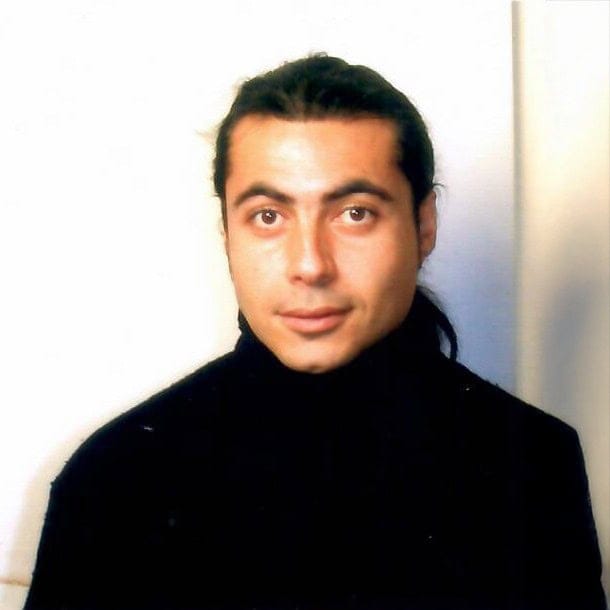
Luca's story
I share my story for one reason. So others do not wait. If you receive a screening invitation, do it.
My name is Luca. I am Italian and 54 years old.
I come from Lucania, in southern Italy. For 25 years, I worked in Milan before deciding to return home. I was drawn back by a slower pace of life, cleaner air, and wholesome food. I believed these were the foundations of healthy ageing.
Two years ago, in April, I attended the feast of Saint Francis in Viggianello, a small village on Mount Pollino. Like many traditional celebrations in rural Italy, it was generous to the point of excess. There were more than 40 refreshment stations offering wine, coffee, pizza, and every local delicacy imaginable. You eat until you cannot eat anymore. That is the tradition.
The following morning, I went to the bathroom and something felt wrong. My intestines produced what I can only describe as a stone, unusually hard and large. There was blood in the toilet. I told myself it was nothing. After such a heavy weekend, it seemed almost normal.
Within days, everything appeared to return to normal. I moved on.
Two weeks later, I received a letter from the local health authority inviting me to take part in colorectal cancer screening with a faecal occult blood test, part of Italy’s national prevention programme.
Two years earlier, at age 50, I had received the same letter and thrown it away. I felt healthy. I was active. I was busy. I did not think it applied to me.
This time, something was different.
Part curiosity, part stubborn confidence, I decided to take the test. It was simple. Non-invasive. And honestly, I assumed any traces of blood would still be there from that weekend.
When the hospital called me in for a colonoscopy, I was not particularly alarmed. I felt fine. I had no real symptoms. Like most people, I felt uneasy about the procedure, but I went.
During the examination, the doctor suddenly said, half jokingly, “Houston, we have a problem.”
Even though the scope is no thicker than a finger, it could not pass. There was a narrowing.
He took samples, spoke quietly with the nurses, and stopped the procedure. Later, after I had recovered from the light anaesthesia, he handed me an envelope with images and a report and told me to go to General Surgery on the sixth floor.
A few hours later, I sat across from another doctor. He spoke for fifteen minutes in medical language I could not fully follow.
Finally, I interrupted him.
“I do not understand all these terms. Please tell me what you think I have.”
He looked straight at me and said:
“You have colon cancer.”
That is how I found out.
Further tests confirmed it. A 7-centimetre stage III tumour, with two lymph nodes already affected. The cancer had likely been growing for at least two years.
My story carries two simple lessons.
First. If I had done the screening at 50, I would probably have needed only surgery. I might have avoided chemotherapy. I might have escaped a lethal bullet.
Second. If I had ignored the small signals from my body and let fear or arrogance stop me from acting, I would likely not be here today.
Screening saved my life.
Listening to our bodies matters. Acting on early warning signs matters. Prevention is not optional. It is essential.
It may sound harsh, but underestimating early diagnosis can lead to a mistake from which there is no return.
Cancer can be treated. But only if it is caught in time.
That timing decides whether you survive and how you live the life that follows.
I share my story for one reason. So others do not wait.
If you receive a screening invitation, do it.
Good prevention to all.
We want to hear your story
We hope that this section of our website will provide the platform and inspiration for patients/survivors to tell their own story. If you would like to contribute to this page please contact us.
Rohini
My journey with cancer began in 2018, not as a patient, but as a caregiver. My younger brother was diagnosed with a rare giant cell tumour, and des...
Luca
My name is Luca. I am Italian and 54 years old. I come from Lucania, in southern Italy. For 25 years, I worked in Milan before deciding to return h...
Romina
For years, my life was peaceful. A “simple” life, yet full: sports, healthy eating, the job I loved, and passions that filled my days—and my ...
Pamela
My name is Pamela, and I live in beautiful West Cork, Ireland. I’ve always loved the outdoors—long walks, coastal hikes, and the fresh Atlantic...

Lorenzo
At 49, I underwent a splenopancreasectomy due to a VIPoma, a rare neuroendocrine tumour in the pancreas that produces excessive VIP hormone, unlike...

Samantha
Finding Strength in the Storm: My Journey with CRC Before my cancer diagnosis, I was a busy, active mother of two, pursuing a social work degree an...

Mlađan
On January 29, 2023, sitting at home in the evening, I felt severe pain in my abdomen. I fell to the floor and writhed in almost unbearable pain wh...

Laura
In October 2022, I discovered that I had a cavernous angioma in my liver. I began feeling the first symptoms (nausea and heaviness in the stomach) ...

Emanuela
The diagnosis dates back to May 20, 2021. Leading up to that time, I had experienced some difficulties. In August 2020, I lost my mother, and the...

Claire
Two and a half years ago, I started having trouble swallowing bread and chicken; it felt like the food was getting stuck in my food pipe and wouldn...

Harry
Update 10 March 2024 A lot has changed since my first diagnosis on 27 May 2021. As mentioned in earlier updates, I was first diagnosed with ‘...

Kjell
Pancreatic Cancer Reflections: Between Hope and Despair Kjell Olof was born in 1942 in Sweden. During the summer of 2021, he began experiencing per...

Claudia
My story, like all of ours, is “unique.” I have always been labelled as “health-conscious,” sometimes with gentle irony and...

Teodora
I’m Teodora, and I’m from Romania. My story is born from grief and longing for the life I was just beginning to build with someone when...

Georgiana
To everyone reading this story, my name is Georgiana. A few months into my 34th year, I was diagnosed with mixed gastric adenocarcinoma, or, more s...

Helen
Hello, I am Helen Canning. I live in Suffolk, England, with my husband Vincent and our two daughters, Erika (6) and Marla (4). I used to have a b...

Richard
In the second half of 2016, I started experiencing symptoms such as a feeling of acid reflux and a burning in my oesophagus, some difficulty in swa...

Katell
Katell Maguet is a 43-year-old French woman who lives in The Netherlands. She shared her emotional story with colorectal cancer to give a voice to ...

Isabelle
Isabelle Chabrier is 56 years old, and lives in Paris, France. She shares her successful journey with pancreatic cancer. Cancer is a common ...

Sven
Sven Tägil is a retired professor of history who will turn 93 this autumn, possibly making him Sweden’s longest pancreatic cancer survivor. ...

Ida
My name is Ida Verbunt, and I am Harry Verbunt’s wife and carer. I am 56 years old, and I’ve known Harry since childhood. We grew up in...

Helena
My name is Helena D’Arcy. I live in Sweden and am a full-time working mother of seven who has always been super-healthy and active. Sh...

Ceri
Ceri Steele – diagnosed in October 2019 My name is Ceri Steele, I was diagnosed with oesophageal cancer on 17 October 2019, three days before my ...

Mia
Hello, my name is Mia, I am 57 years old and live in Finland. I am a mother to two boys and a girl, and twenty years ago, I was diagnosed with Lync...

Mark
My wife, Barbara, was diagnosed with stage four colon cancer in November 2006. I became a carer very suddenly! Maybe I shouldn’t have been so...

Anders
My Journey with Pancreatic Cancer, five years later… Hello, my name is Anders Bovin, I am 80 years old, and these days I spend my time between Sw...

George
It is with great sadness that we recognize the passing of George in January 2023. George was a remarkable young man whose strength and kindness rad...

Laure
I am the caregiver of my husband, Guillaume, who was diagnosed with metastatic colon cancer in January 2021 at 43. We have two children who are now...

Stephen
I am a colorectal cancer survivor. My local hospital asked me to set up a peer support group. We planned a launch in spring 2020, but so did COVI...

Mike
Hi, my name’s Mike and I live outside of Paris, France. I’m originally from the UK but have lived in and around Paris for the last 25 years. I ...

Andi
My name is Andi and I’m a 39 years old Romanian, husband and father of two wonderful daughters. I’ve been working in the Pensions &...

Angelica
Angelica is a survivor and patient advocate who does not take no for an answer! She lives in Sweden and volunteers closely and personally with canc...

Hilde
I am Hilde, a mother of two, partner, medical doctor, and a Lynch patient. I am the first in my family with this diagnosis. When I was diagnosed wi...

Leon
Hello, my name is Leon. I’m 45 and I live in Tilburg in the Netherlands close to the Belgian border. I work for Stichting Darmkanker (Colon Cance...

Samo
Hello I’m Samo. I’m pleased to be able to share my story with you as I want it to be an inspiration for everybody who turns 50 and consequently...

Radek
Hello, my name is Radek. I would like to share my story with you about living with pancreatic cancer. It began with the onset of jaundice that made...

Eva
Eva shares her experiences with pancreatic cancer and the importance of staying physically fit throughout the process – from diagnosis throug...

Patrycja
Patrysza spoke about her journey with pancreatic cancer at our Masterclass 2021 – she shared the importance of mental health for her life with th...

Vincent
Hi, I’m Vincent, I’m from Gouda in the Netherlands and I was diagnosed in 2015 at 42 years old with stage IV colorectal cancer and a low-grade ...

Anikó
Anikó from Hungary was diagnosed with hepatocellular carcinoma (HCC) in 2015. HCC is the most common type of liver cancer accounting for approxima...

Ireneusz
It is with great sadness that we recognize the passing of Ireneusz in December 2021. He leaves behind his wife Beata. Ireneusz was very active and ...

Daksha
Dr Daksha Trivedi is a Senior Researcher in Public Health at the University of Hertfordshire in England. Daksha was diagnosed with oesophageal canc...

Milan
By the end of 2000 I felt very tired. Urges of going to the bathroom were sudden and harder to control. I also often felt very sleepy during the da...

Dave
Dave Chuter, active patient advocate was diagnosed with oesophageal cancer in 2006. Following successful treatment, he returned to work and alongsi...

Stefan
I’m Stefan. I’m a co-founder of Digestive Cancers Europe and was the organisation’s CEO from 2019 to the beginning of 2021. I would like ...

Robyn
I first realised something was wrong when – at 28 years old – I collapsed. It was 2005, and I was taken to hospital for several tests after it ...

Celeste
“When I was first diagnosed with colon cancer it was quite complicated because I did not know what I had…” Listen to Celeste̵...

Marta
“Have you had a colonoscopy?” I was asked this question by my new doctor the first time that I saw him after I retired. I had been a he...

Barbara
No-one expects to get cancer. No matter what the statistics show, very few people relate the figures to themselves and, I must admit, it was the sa...

Heidi
Until April 29th, 1999, when I was 45, I was absolutely convinced I had the lease of eternal life. I had a sweet daughter , a careful husband and a...